Quran Ijazah Course Online for Precise Recitation, Tajweed Mastery & Sanad Preparation

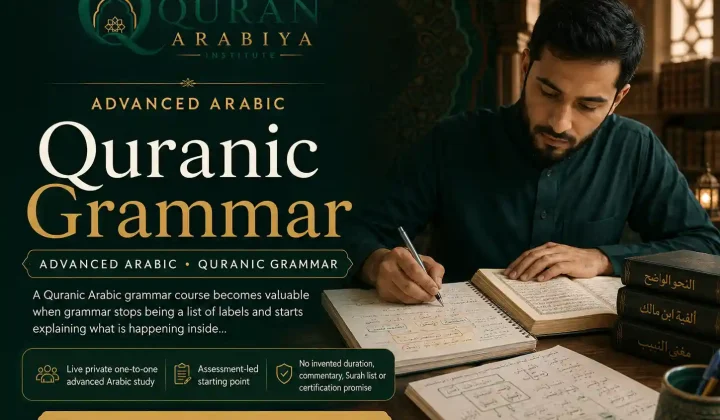
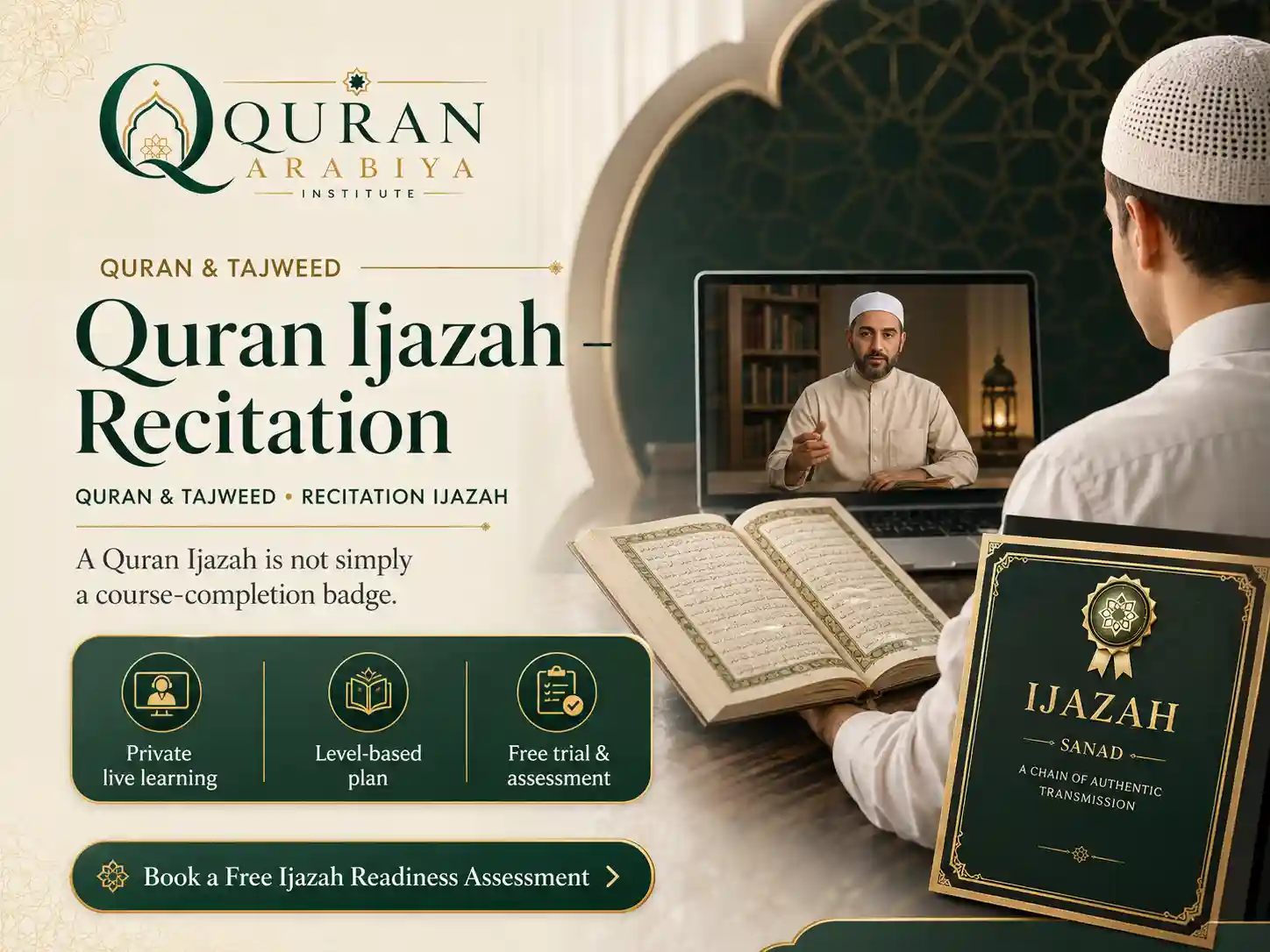
A Quran Ijazah is not simply a course-completion badge. In a recitation route, the learner works under a qualified teacher toward precise Quran recitation and, when the teacher is satisfied with the required complete recitation and route conditions, formal authorization may be granted. This Quran Ijazah course online is therefore for advanced reciters. It begins with readiness—not with a promise of certification—and remains clearly separate from Ijazah by memory.
إجازة01ReadyPass the recitation gate02KhatmahRecite the complete Quran03CorrectTrack recurring errors04AuthorizeTeacher-dependent Ijazah

Understand What a Quran Recitation Ijazah Actually Confirms

A recitation Ijazah is a teacher’s authorization connected to a specific recitation route and scholarly transmission. Learners searching for an online Ijazah in Quran recitation should know that it is not a generic certificate for attendance. The teacher must be qualified for the route and the learner must meet the accepted standard. A Quran recitation Ijazah is therefore a scholarly authorization route, not a marketing label.
Course study

Structured preparation and supervised recitation can be part of the course. The teacher keeps the recitation route clear and retests corrections later during formal preparation, while keeping the correction target narrow and clear. Move forward when corrections remain stable; final Ijazah still depends on the qualified teacher.
Click a row to read what the indicator means in this course.

Pass a Readiness Gate Before the Formal Khatmah Begins

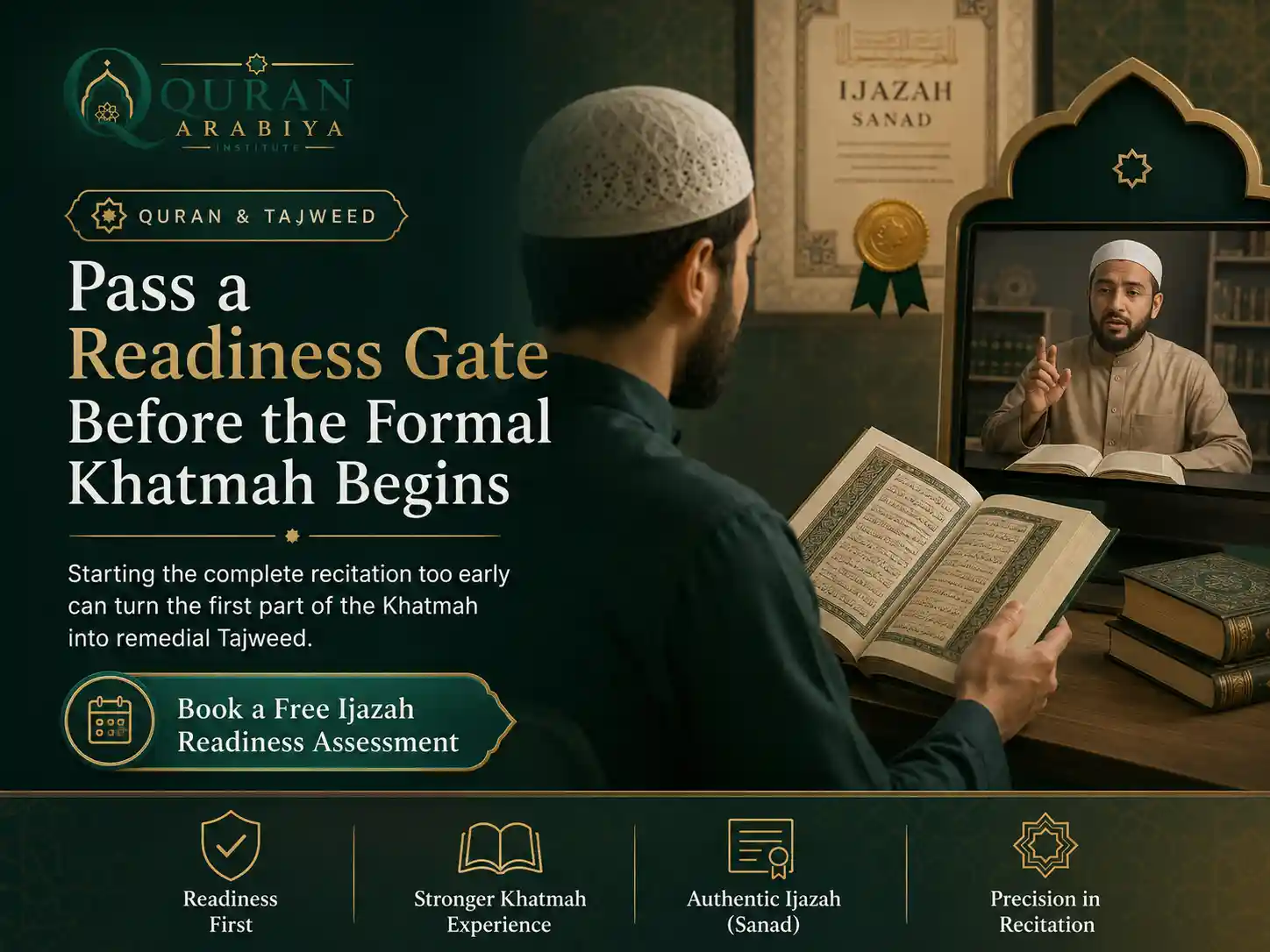
Starting the complete recitation too early can turn the first part of the Khatmah into remedial Tajweed. A readiness audit can check Makharij, Sifaat, rule application, fluency and stopping/starting. If foundational errors recur, a preparation phase may be recommended first.

Recite the Complete Quran from the Mushaf Under Direct Supervision

In the recitation path, the core work is supervised complete Quran recitation from the Mushaf according to the defined Riwayah/route and the teacher’s requirements. The teacher listens, corrects and checks whether earlier corrections stay stable as the Khatmah progresses. This is distinct from Hifz Ijazah, where presentation from memory is central.
Begin the Khatmah

Start the complete Quran recitation only after readiness is established. The teacher keeps the recitation route clear and retests corrections later during formal preparation, while keeping the correction target narrow and clear. Move forward when corrections remain stable; final Ijazah still depends on the qualified teacher.
Riwayah

Name the recitation being read before the formal route begins. The teacher keeps the recitation route clear and retests corrections later during formal preparation, while keeping the correction target narrow and clear. Move forward when corrections remain stable; final Ijazah still depends on the qualified teacher.
Define the Riwayah, Teacher and Authorization Route Before You Start

A serious Quran Sanad for recitation should not be marketed as an unspecified universal certificate. The learner should know what Riwayah is being read, who is supervising it and what standard is expected. A later move into Qiraat or another Riwayah is a separate advanced route.

Track Recurring Tajweed Errors Until They Stay Corrected

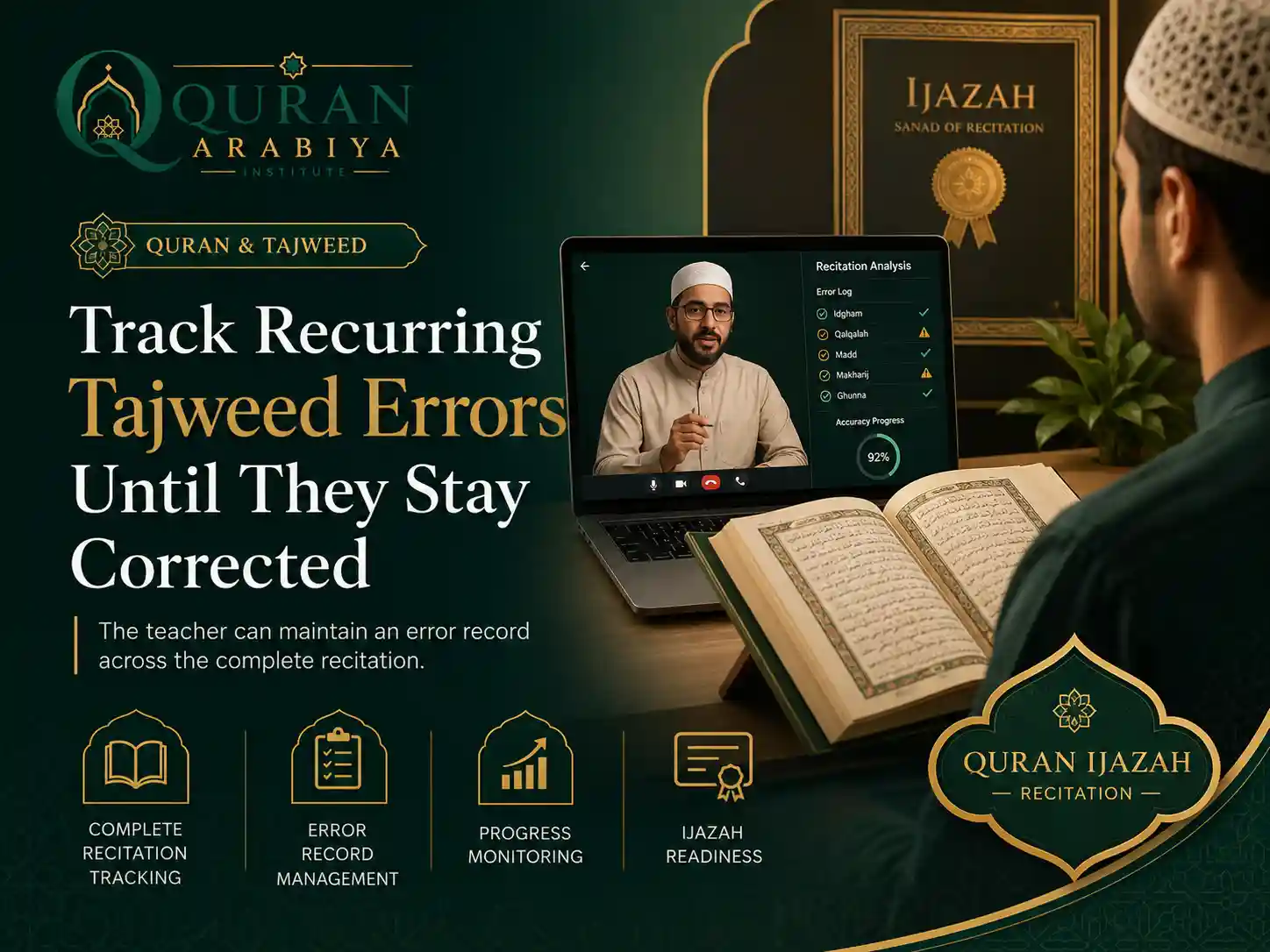
The teacher can maintain an error record across the complete recitation. A one-time slip and a recurring articulation habit are not treated the same. Re-testing patterns in later passages helps show whether correction has truly transferred. Any wording such as certified Quran Ijazah program should be used carefully so the page never implies automatic authorization.
ListenModelApplyTransfer
Quran Ijazah course online - 1
Quran Ijazah course online - 2

Make Waqf, Ibtida and Continuous Recitation Part of the Standard

Advanced recitation is more than isolated word accuracy. The learner needs enough control to read continuous passages, plan breath, stop appropriately and restart cleanly. Exact requirements depend on teacher and route, but preparation should not ignore these habits.
ListenModelApplyTransfer

Final Ijazah Is Teacher Authorization—Not Automatic Course Completion

A learner may complete substantial study and still need more correction before authorization. Ijazah in Tilawah online remains a supervised scholarly route; the teacher grants authorization only when the required standard has been met.
GoalLevelScheduleMatch
Quran Ijazah course online - 3
Quran Ijazah course online - 4

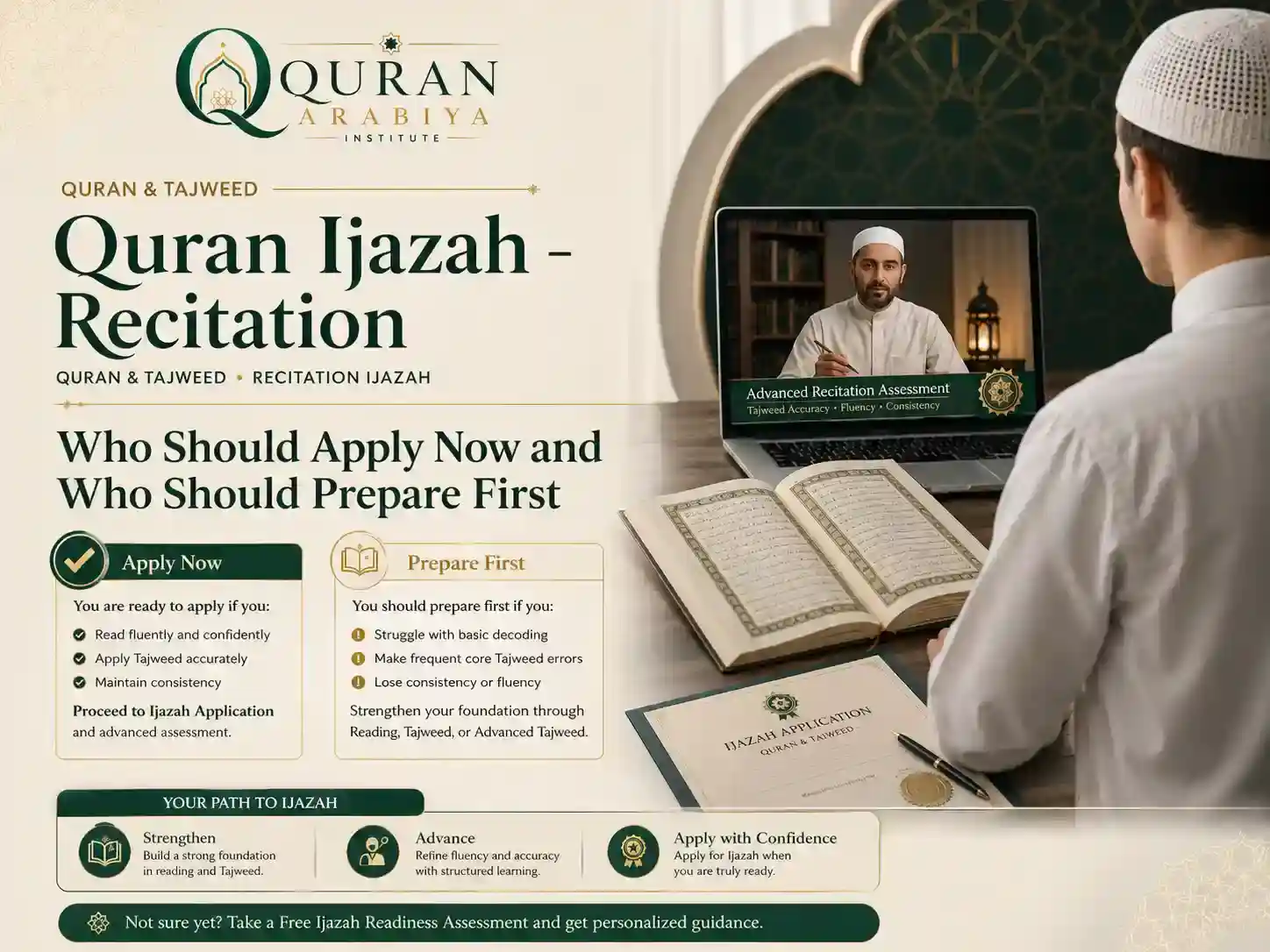
Who Should Apply Now and Who Should Prepare First

A suitable candidate is already a strong Quran reader with stable Tajweed. Learners still struggling with basic decoding or frequent core errors should normally prepare through reading/Tajweed/Advanced Tajweed first. The free assessment can make that distinction before a formal plan is confirmed.
FocusPracticeCheckProgress

What Progress Should Look Like

A clear readiness decision before formal Khatmah.
Supervised complete Quran recitation according to the agreed route.
Ongoing recurring-error correction.
Advanced attention to continuous recitation and stopping where required.
Transparent distinction between participation and authorization.

Start with a Free Trial

Request a free Ijazah readiness assessment. Read an unprepared passage, explain your current Riwayah and let the teacher determine whether to begin the formal route or prepare first.

Frequently Asked Questions

Complete memorization is not the defining requirement of the recitation Ijazah route; Hifz Ijazah is a separate page.

No. Authorization depends on meeting the supervising teacher’s required standard.

No. Beginners should first build strong reading and Tajweed.

A course certificate can record participation/completion; an Ijazah is specific scholarly authorization by a qualified teacher.

Yes, but each Riwayah/route has its own requirements and should be treated as a distinct advanced path.

The teacher should assess fluency, Makharij, Tajweed, stopping and recurring errors to decide whether the learner is ready. Preparation may be recommended before formal presentation begins.

The exact Riwayah and route should be defined before the formal journey begins. Authorization is specific in scope, so the teacher and learner should be clear about what is being presented.

Recurring Tajweed and recitation errors can be recorded, corrected and retested later in different passages. The goal is stable correction across the Khatmah, not a one-time perfect word.

Yes. Appropriate stopping, breath planning and clean restarting are part of controlled continuous recitation and may be included according to the teacher’s standard.

Yes. Course participation or completion and scholarly authorization are different outcomes. The qualified issuing teacher decides whether an Ijazah can be granted.

There is no responsible fixed promise because readiness, error patterns, lesson frequency and the teacher’s required standard affect the journey. Final authorization is teacher-dependent.

A change may be possible, but the exact authorization route and what a new teacher requires should be clarified. Ijazah is tied to the qualified teacher and the accepted recital within the stated scope.

The assessment should identify the most useful preparation route, such as adult Tajweed or advanced Tajweed, rather than starting a formal Khatmah prematurely.

Yes, if you meet the prerequisites and study under a qualified teacher for that route. A later Riwayah or wider Qiraat study is a separate advanced pathway.
KEEP LEARNING

Continue with a Course That Fits Your Next Step

Start the Right Quran Path with a Free Trial

Use the assessment to confirm whether Quran Ijazah – Recitation is the right route for the learner’s current level and goal.
Chat with us