Identify the learner’s real starting point before deciding course, pace or depth.
Use the free trial and course guidance to identify the learner’s level, immediate goal and realistic next milestone. If you are not sure whether to begin with Quran reading, Tajweed, Hifz, Arabic, or Islamic Studies, you do not need to guess before contacting the institute.
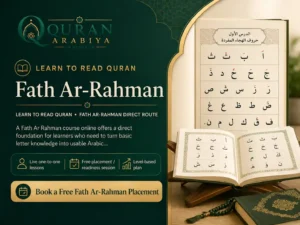
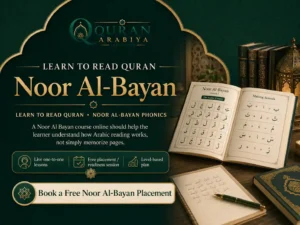
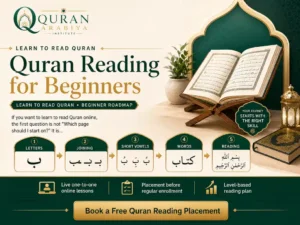
That usually points to a reading-foundation problem rather than a need for advanced Tajweed or memorization. The useful next step is to check letter recognition, vowels, blending and connected reading, then choose the reading route that matches the actual gap. A clear starting point prevents advanced material from hiding a foundation problem.
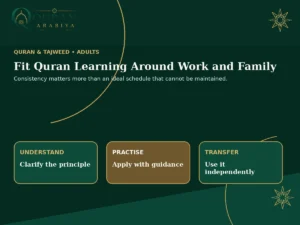
The Quran Arabiya teaching method uses a repeating loop: observe the learner, identify the immediate problem, explain only what is needed, practise with correction, assign a manageable next task and review whether the skill transfers to new material.
See or hear what the learner can actually do before correcting or assigning more work.
Private teaching gives the teacher room to slow down, repeat, challenge or change the task. But personalization should not mean starting a different curriculum every week. The lesson still needs a path: current skill, next skill, guided practice, home practice and periodic review.
The lesson starts from what the learner can actually do now, not from a label alone. A teacher may need to distinguish script recognition from reading, rule knowledge from applied recitation, or grammar familiarity from real language use. This creates a starting point tied to evidence.
One institute, but not one forced route.
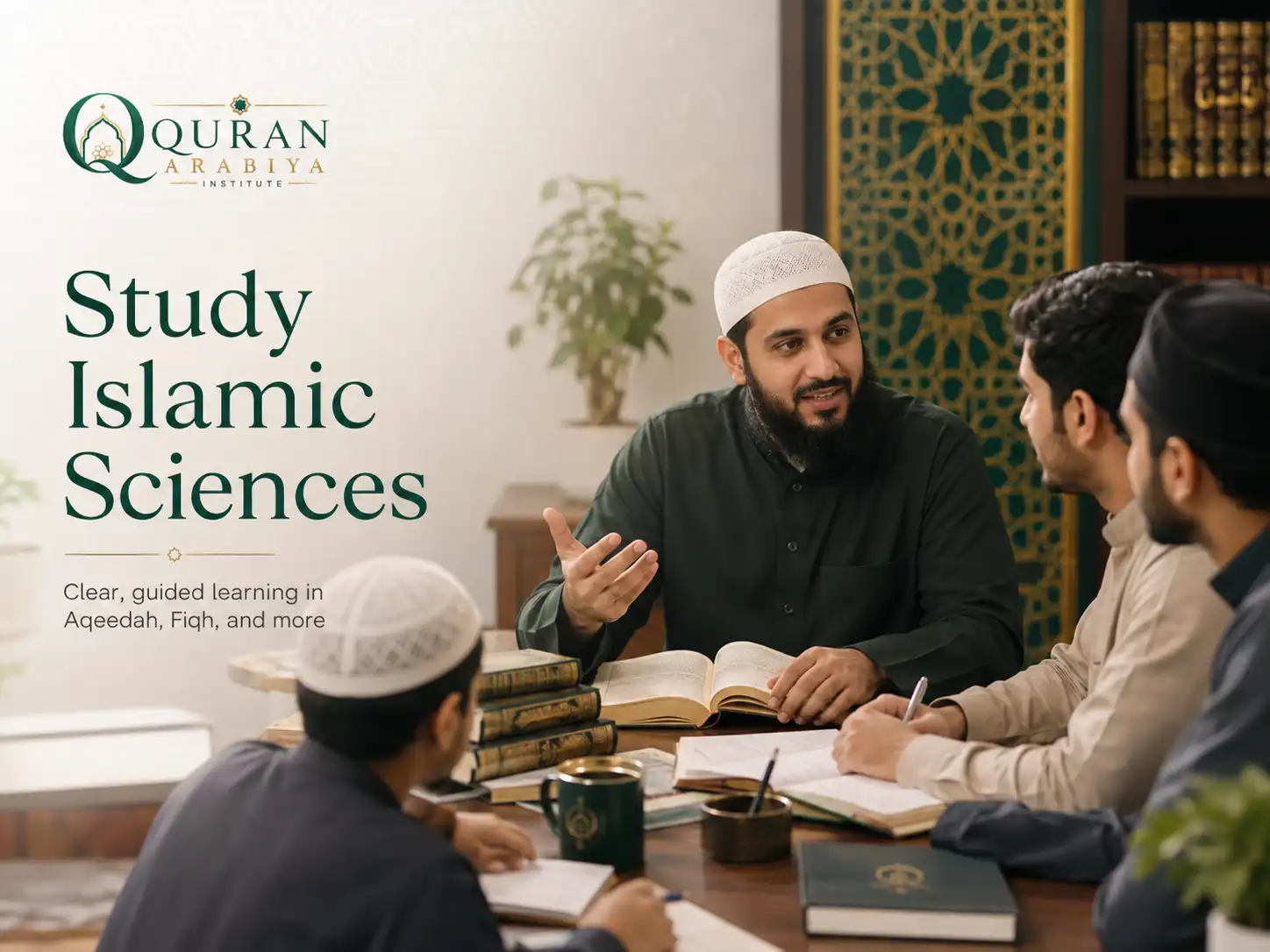
The teacher should be prepared for the actual course route, whether the learner needs reading foundations, Tajweed, Hifz, Arabic conversation, grammar or an Islamic Studies subject. A strong biography is not automatically the right match for every learning goal. Subject fit keeps the decision educational rather than decorative.
The first useful decision is to describe where the learner is now and what needs to change. Age can shape lesson style and attention, but it does not replace level or goal. This information gives the academy enough context to make the free trial useful instead of spending the session only collecting basics.
Yes. Complete beginners should be routed to a reading-foundation course rather than placed directly into Tajweed or Hifz simply because those courses are popular. The starting point should reflect what the learner can actually read now.
Yes. The catalogue includes age-specific and all-age routes. Age helps shape lesson style and narrow course options, but placement should still consider current skill, learning goal and the kind of support the learner needs.
Yes. Arabic Language, Advanced Arabic, Islamic Sciences and Islamic History are distinct learning routes with their own goals. Subjects can be connected when useful, but one subject is not a compulsory gateway to another.
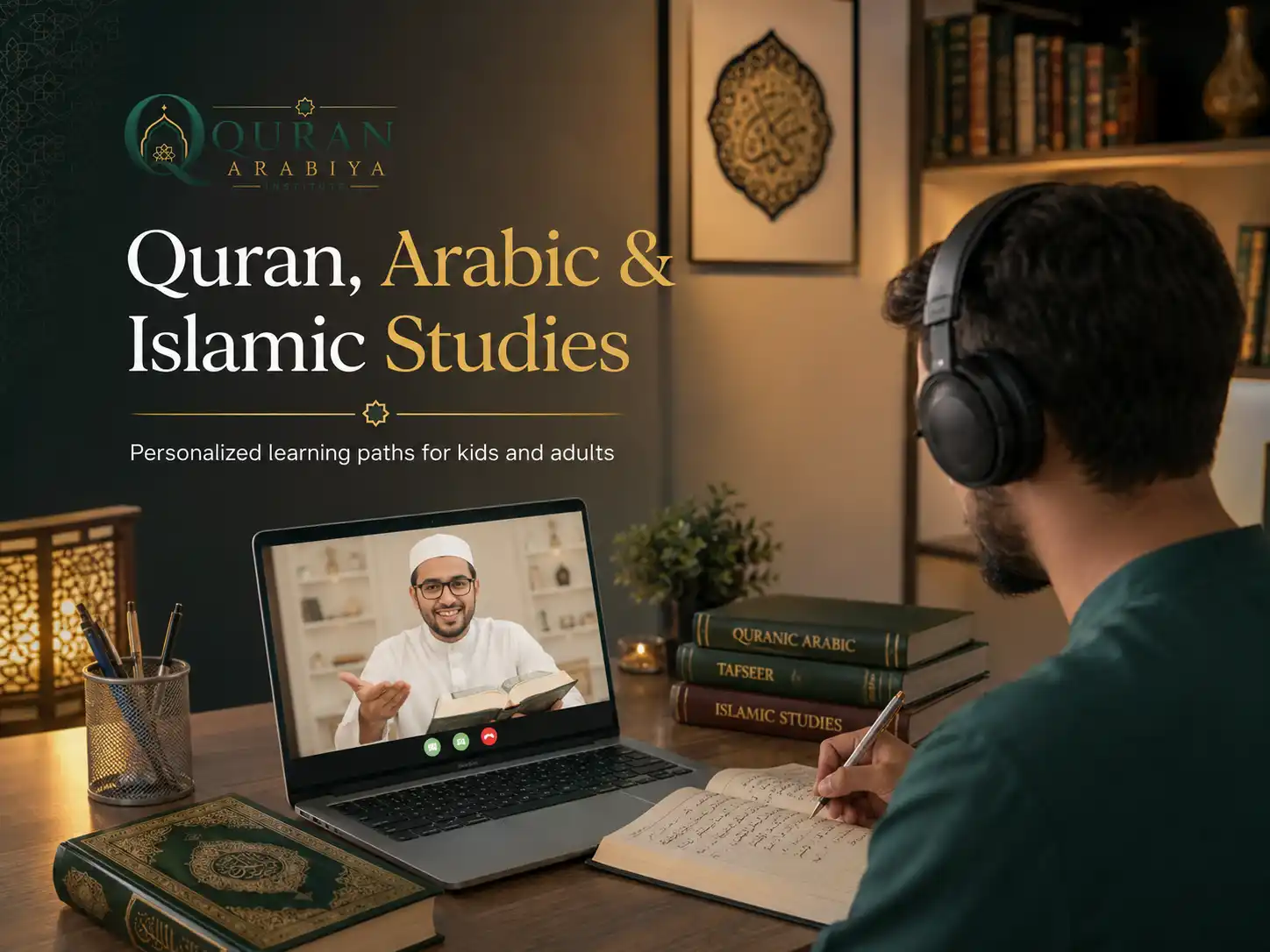
The operating model used for Quran Arabiya is live one-to-one online teaching. That allows the teacher to hear, correct, explain and adapt in real time instead of relying only on recorded material.
Yes. Teacher preference can be requested and is considered together with subject fit, learner age and level, teaching style, time zone and current availability.
Start from the skill problem: reading foundation, recitation and Tajweed, memorization and revision, or an advanced recitation goal. The free trial can help confirm the likely starting route when the course name is not obvious.
The current trial model does not require a credit card to book. The academy uses the learner information to confirm the next step and the trial is intended to help clarify level, teaching fit and course direction before enrollment.
Yes, when the combined plan is educationally useful and the schedule is realistic. The two subjects should still keep separate outcomes so progress can be measured clearly instead of blending everything into one vague programme.
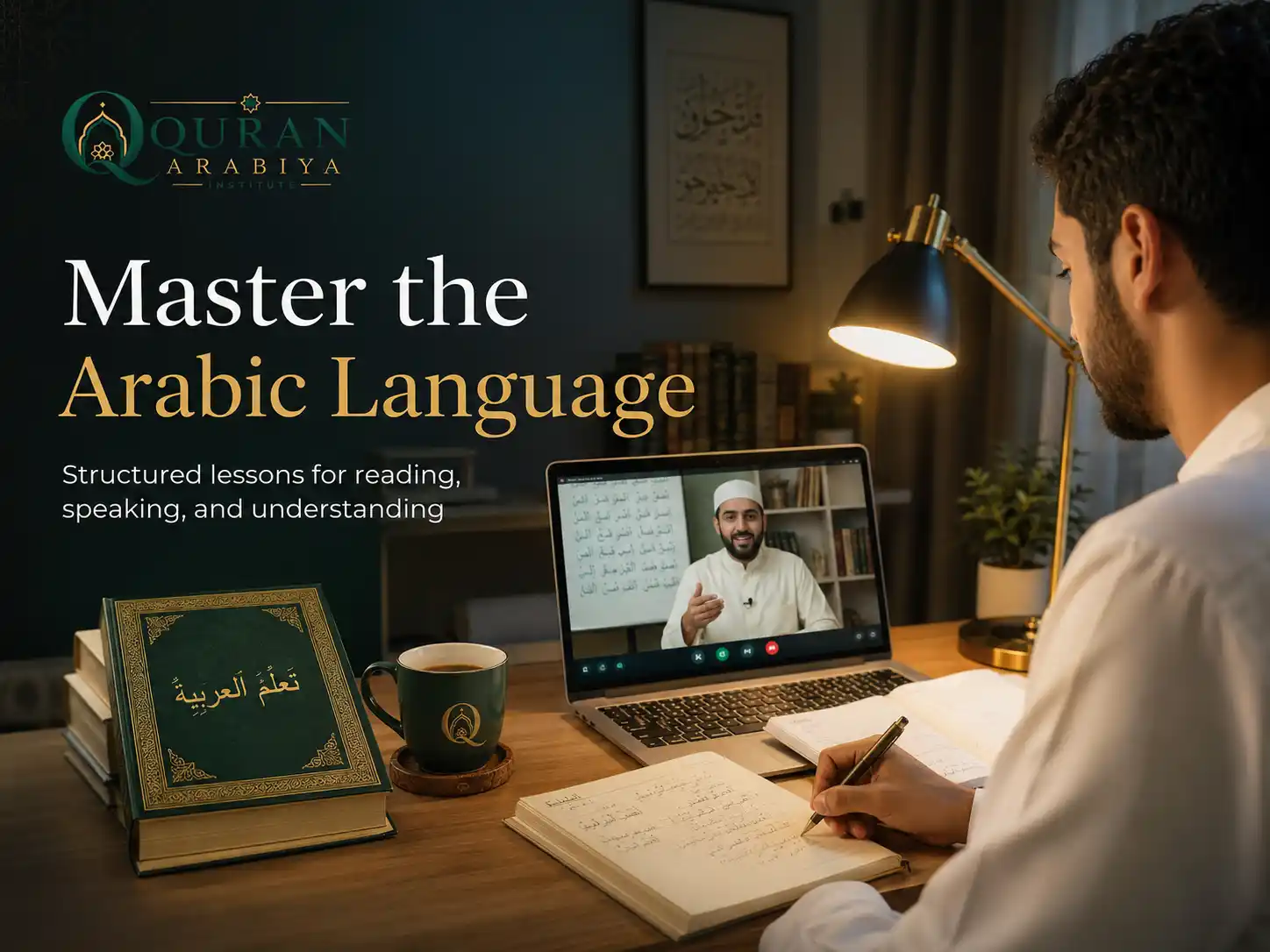
Yes. The Arabic Language routes include Fusha and Modern Standard Arabic alongside reading, writing, speaking, pronunciation and established curricula. Advanced Arabic routes can go deeper into grammar, morphology, Quranic Arabic and classical texts.
The approved course catalogue includes Egyptian Arabic as a distinct track inside Arabic Language. It should remain a clear dialect goal rather than being mixed into Fusha or Quranic Arabic without explanation.
Use the dynamic course finder to narrow the current WordPress catalogue by category and age. If the learner’s starting point is still unclear, book the free trial and describe what the learner can do now and what you want to change.
Yes. A learner can outgrow a course, change goals, need a different lesson rhythm or respond better to another teaching style. Progress reviews should ask whether the current route still matches the learner’s performance and circumstances.
Use the Pricing page for the current plan mechanics and live pricing information. The Home page introduces the decision routes, while Pricing remains the dedicated place for cost and plan comparison.
Use the blog to understand concepts, terminology and home-practice ideas or to prepare better questions. Live lessons are most valuable when the learner needs to be heard, corrected, assessed or guided through a structured course.