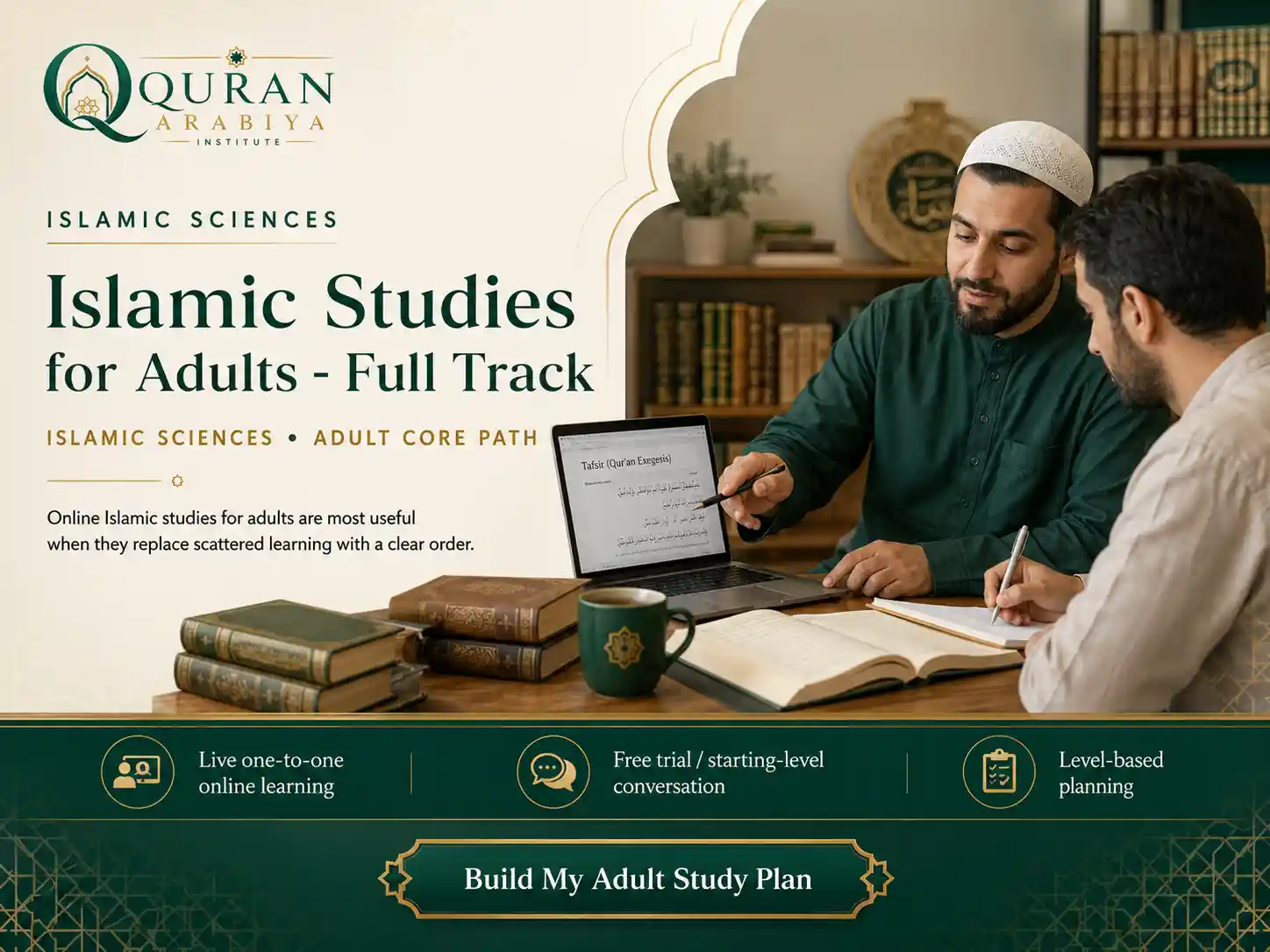
Online Islamic studies for adults are most useful when they replace scattered learning with a clear order. Many adults know individual rulings, stories or reminders but cannot see how Aqeedah, Fiqh, Hadith, Tafsir and Seerah fit together. A structured course should first identify the gaps, then build a sequence that makes later study easier.
Quran Arabiya Institute can use the free trial to understand the learner’s current background, goals and available study time. That makes Islamic classes for adults online more personal than a fixed playlist: one learner may need foundations, another may need to organize years of informal knowledge, and another may be ready to move quickly into a specialist science.
Learning from beneficial talks and articles can answer immediate questions, but it does not automatically create a curriculum. A structured Islamic studies program gives each subject a place: beliefs provide a foundation, Fiqh organizes practice, Hadith connects the learner to Prophetic teaching, Tafsir deepens Quran understanding, and Seerah provides historical and moral context.
The goal is not to rush through all sciences. It is to make the learner’s knowledge easier to retrieve, connect and build on.
Learning from beneficial talks and articles can answer immediate questions, but it does not automatically create a curriculum. It is to make the learner’s knowledge easier to retrieve, connect and build on. The aim is to understand the principle clearly enough to recognize where it applies.
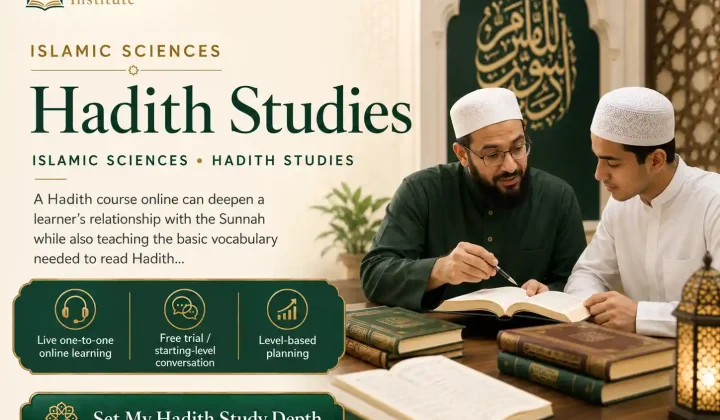
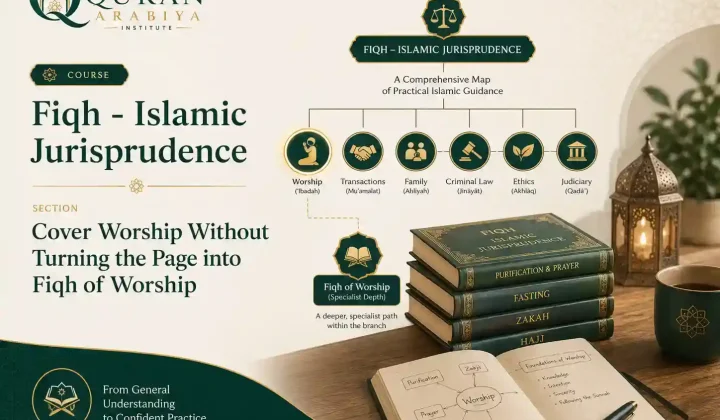
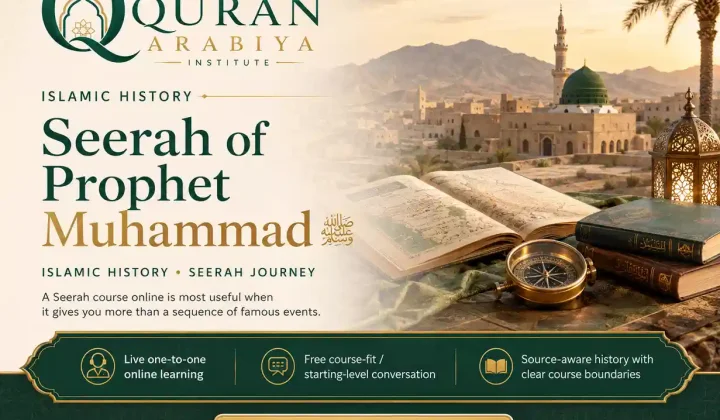
An Islamic studies course for adults should clarify both the differences and the connections between disciplines. Aqeedah asks what Muslims believe. Fiqh organizes practical rulings. Hadith Studies introduces Prophetic reports and their place in the tradition. Tafsir focuses on Quranic explanation. Seerah gives a chronological human context for revelation and community formation.
Once the learner sees that map, questions can be placed in the right discipline instead of every lesson turning into an unstructured discussion about everything.
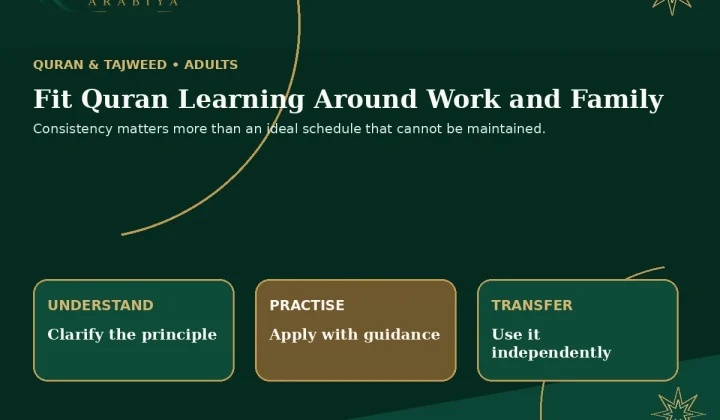
A useful checkpoint is to explain the idea in the learner’s own words, identify one example, and know when a deeper specialist course is the better next step.
Adult Islamic education online should assume uneven prior knowledge. A person may pray consistently but never have studied the structure of Fiqh; another may know many Hadith by translation but little about context; another may have studied Arabic yet need basic Aqeedah organization.
A starting-level conversation allows the teacher to avoid unnecessary repetition while still repairing foundational gaps that could make advanced material confusing.
Adult Islamic education online should assume uneven prior knowledge. A person may pray consistently but never have studied the structure of Fiqh. The aim is to understand the principle clearly enough to recognize where it applies, with guided discussion checking understanding before the learner moves deeper.
Adults often carry questions gathered over years. Private lessons create space to ask what a term means, why two topics appear to conflict, or where a practical question belongs academically. The teacher can answer within the scope of the course and, where a question requires a specialist ruling or authority, explain that boundary rather than improvising.
That makes learn Islam online for adults a guided study process rather than a stream of isolated answers.
Good adult learning should change how the learner studies and applies knowledge. A Fiqh concept should make worship more informed; a Hadith lesson should improve the way a text is understood in context; a Tafsir lesson should make Quran reading more attentive; an Aqeedah lesson should clarify the beliefs behind worship and reliance.
The course should therefore include review, questions and simple application tasks instead of measuring progress by hours watched.
A practical checkpoint is to explain one idea in simple words and connect it to one realistic situation before adding another concept.
Adults often carry questions gathered over years.
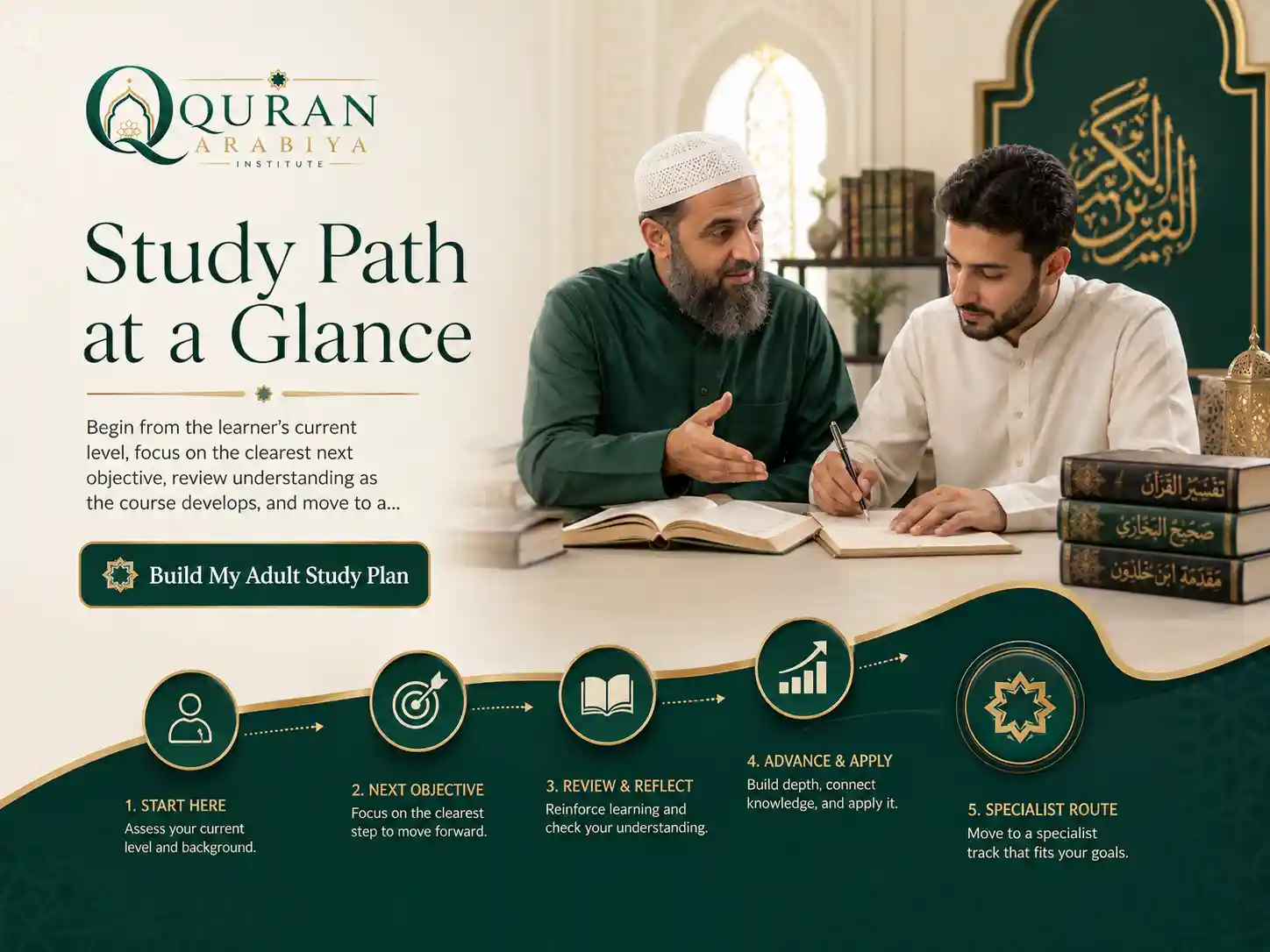
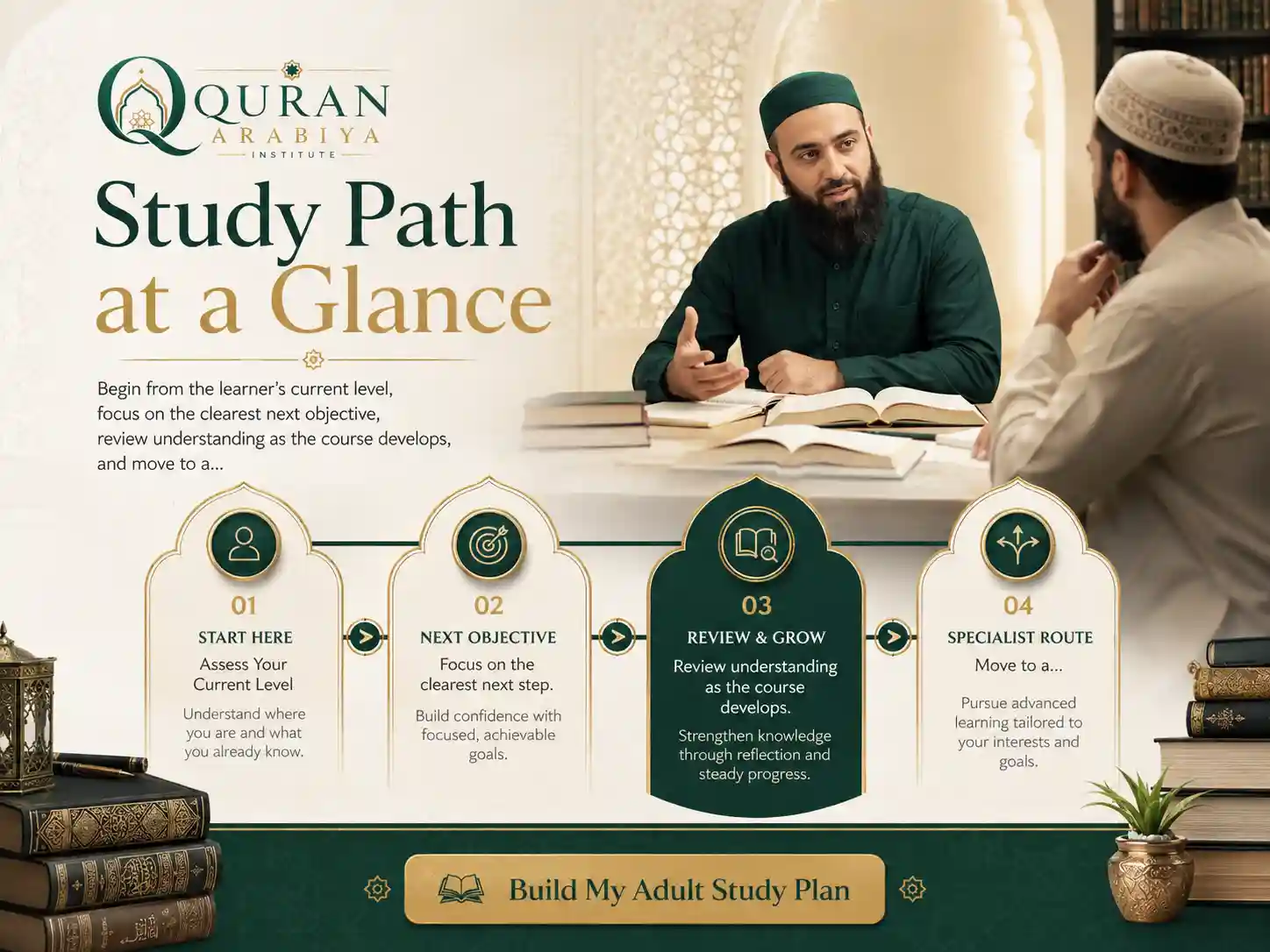
The broad adult route is valuable until one subject becomes the learner’s clear priority. If the learner wants a dedicated Islamic creed course, move to Aqeedah. If legal rulings and organized jurisprudence are the goal, use the Fiqh page. Hadith, Tafsir and Usul each have their own specialist URLs and deeper scope.
This protects the full track from becoming vague and helps the student choose depth intentionally.
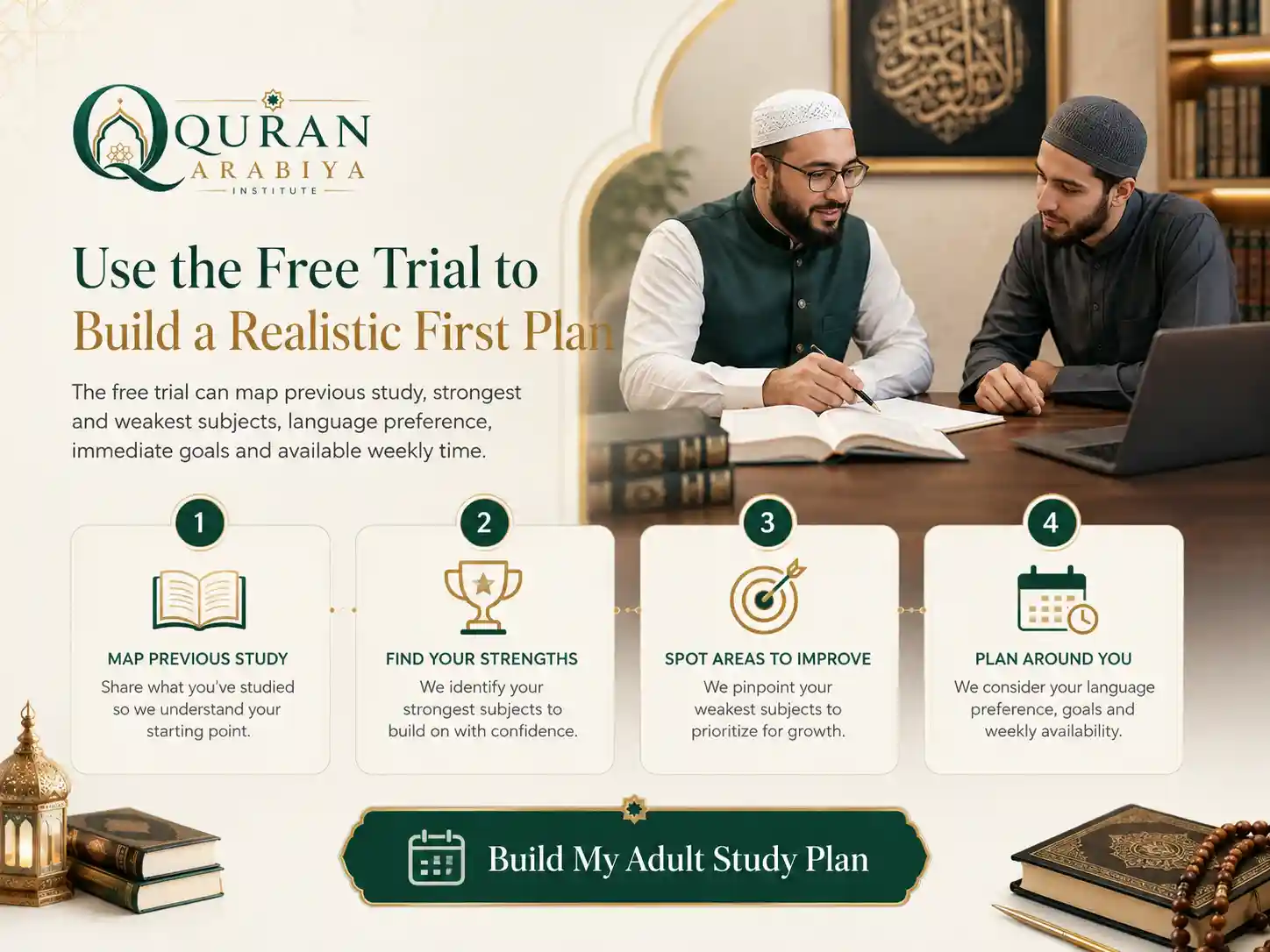
The free trial can map previous study, strongest and weakest subjects, language preference, immediate goals and available weekly time. The first recommendation should be about sequence, not selling the largest package.
A learner who needs foundations may begin broadly; a learner with a clear advanced goal may be routed directly to a specialist course. That is a better use of adult attention and a clearer content promise.
Can distinguish the role of major Islamic sciences and place questions in the correct discipline.
Builds a connected foundation rather than a collection of unrelated facts.
Develops a realistic study sequence based on current level and goals.
Uses guided questions and review to improve understanding and application.
Can identify when specialist study in Aqeedah, Fiqh, Hadith, Tafsir or Usul is the better next step.
Book a free trial to map what you already know, where the gaps are and whether a broad adult Islamic Studies route or a specialist science is the right first step.
No. The course can begin from foundations, but adults with previous study should use the free trial to avoid repeating material unnecessarily.
No such claim should be assumed. This page is for a broad structured adult Islamic Studies pathway, not a formal scholarly qualification unless the academy separately verifies one.
A broad route can include Aqeedah, Fiqh, Hadith, Tafsir, Seerah and related core topics, with the exact order adjusted to the learner.
Yes. If one science is clearly your priority, the dedicated Aqeedah, Fiqh, Hadith, Tafsir or Usul course is usually the cleaner route.
You can ask for clarification within the course, but case-specific fatwas or high-stakes rulings may require an appropriately qualified scholar and should not be promised by a general course page.
Adults who want a coherent starting route through Aqeedah, Fiqh, Hadith, Tafsir, Seerah and essential Islamic knowledge without immediately committing to one specialist science.
The learner does not need to repeat every introductory point automatically. The starting conversation can identify what is already stable, what is only familiar by name and which concept needs the first focused explanation or practice.
Private teaching lets the teacher adjust vocabulary, pace, examples and questioning without changing the academic goal. It also creates space to stop on a misunderstood concept, check it from another angle and continue only when the learner can explain it more independently.
The page follows a defined scope and routes deep sibling intent outward. Do not reproduce specialist curricula or rank-target phrases such as Aqeedah course online. This protects both learning clarity and the SEO role of the dedicated specialist courses.
The course can explain relevant evidence and terminology at the level required by the subject, while avoiding claims beyond the confirmed text, teacher or syllabus. High-trust topics remain guided study rather than independent fatwa, hadith grading or personal interpretation.
No. The course gives the learner a structured foundation and helps identify the next priority. When one subject becomes the main goal, the specialist Aqeedah, Fiqh, Hadith, Tafsir, Adab or other dedicated route should take over rather than being compressed into one page.
The trial can identify current knowledge, goals, preferred depth and the most suitable route before regular enrollment. It is used as a placement and fit step, not as guaranteed certification, a fatwa session or a promise of fixed completion time.
Progress should be visible in understanding and application rather than chapters finished. A useful checkpoint is whether the learner can can distinguish the role of major islamic sciences and place questions in the correct discipline. builds a connected foundation rather than a collection of unrelated facts.
The next step should follow the skill or science that becomes dominant. Own the adult Islamic Studies hub and the “structured Islamic studies program” intent. It should explain study order and route deeper learners to dedicated Aqeedah, Fiqh, Hadith, Tafsir and Usul pages. Once that role has been fulfilled, the teacher can recommend the most relevant specialist route instead of expanding the course beyond its intended scope.
If you are considering online Islamic studies for adults, begin with the concept or study gap that matters most now. The free trial can clarify your current level, intended depth and best-fit route without inventing a certificate, fixed duration or specialist ruling that has not been verified.