Qalun Recitation Course to Master Riwayat Qalun ‘an Nafi' with Applied Tajweed & Reading Practice

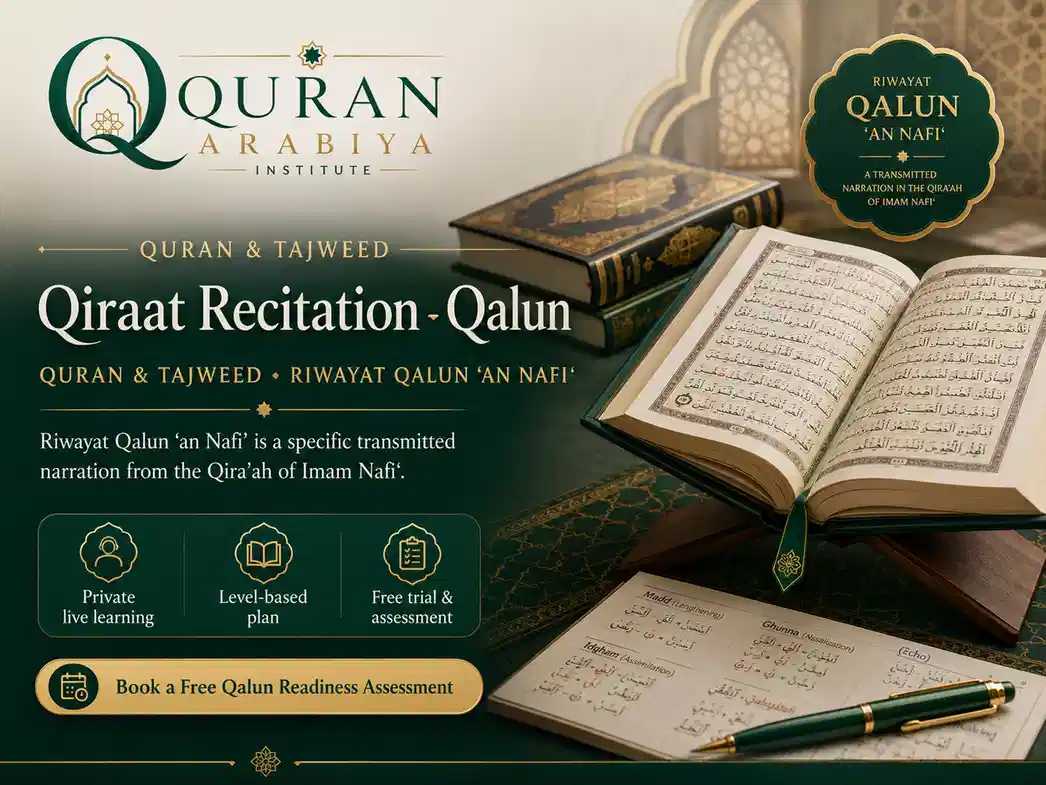
Riwayat Qalun ‘an Nafi’ is a specific transmitted narration from the Qira’ah of Imam Nafi‘. Learning it well means more than memorizing a list of differences from Hafs. This Qalun recitation course builds a coherent reading system: understand where Qalun sits in the transmission map, learn recurring principles and word-specific differences under qualified guidance, and apply them consistently in continuous recitation without mixing routes.
قالون01Nafi‘Know the Qira’ah02QalunStudy one Riwayah03UsulBuild recurring rules04ReciteSustain Qalun without mixing

Study One Riwayah Deeply Before Treating Qiraat as a Comparison Exercise

A learner can easily reduce Qiraat study to “Hafs says this, Qalun says that.” Comparison can clarify, but it should serve a coherent Qalun reading rather than replace it. Riwayat Qalun course online study should first establish one consistent transmitted system before deliberate comparison is used.
Stay coherent

Study one Riwayah deeply before treating Qiraat as a broad comparison exercise. The teacher keeps Qalun coherent as one Riwayah and tests the point in sustained recitation, while keeping the correction target narrow and clear. Move forward when Qalun remains consistent across longer passages without mixing.
Imam Nafi‘

Qalun is transmitted from Imam Nafi‘, one of the canonical Imams. The teacher keeps Qalun coherent as one Riwayah and tests the point in sustained recitation, while keeping the correction target narrow and clear. Move forward when Qalun remains consistent across longer passages without mixing.

Understand Where Qalun Sits in the Qira’ah of Nafi‘

Qalun is a Riwayah transmitted from Imam Nafi‘, alongside Warsh. Qalun is therefore not itself one of the ten Imams. Qalun an Nafi lessons should establish that attribution before detailed rule work so the learner understands the wider Qiraat map correctly.

Check Tajweed and Current Riwayah Readiness First

The assessment can listen to the learner’s current recitation and check whether core Tajweed is stable. If basic Makharij/rule application is weak, adding another Riwayah can multiply confusion. A strong Qalun student needs enough recitation control to notice a transmitted difference without losing universal Tajweed foundations.
ObserveIdentifyPracticeRetest
Qalun recitation course - 1
Recurring Usul

Build the recurring principles that shape Qalun recitation.
Build a Personal Map of Qalun’s Recurring Usul

Rather than publish a risky simplified rule list, the course should teach recurring Qalun Usul systematically under the assigned specialist. The learner can maintain a structured reference of each principle, its conditions and representative Quran examples. This turns Qalun Tajweed rules into a usable reading system while respecting the exact route.

Learn Word-Specific Farsh in Its Quran Context

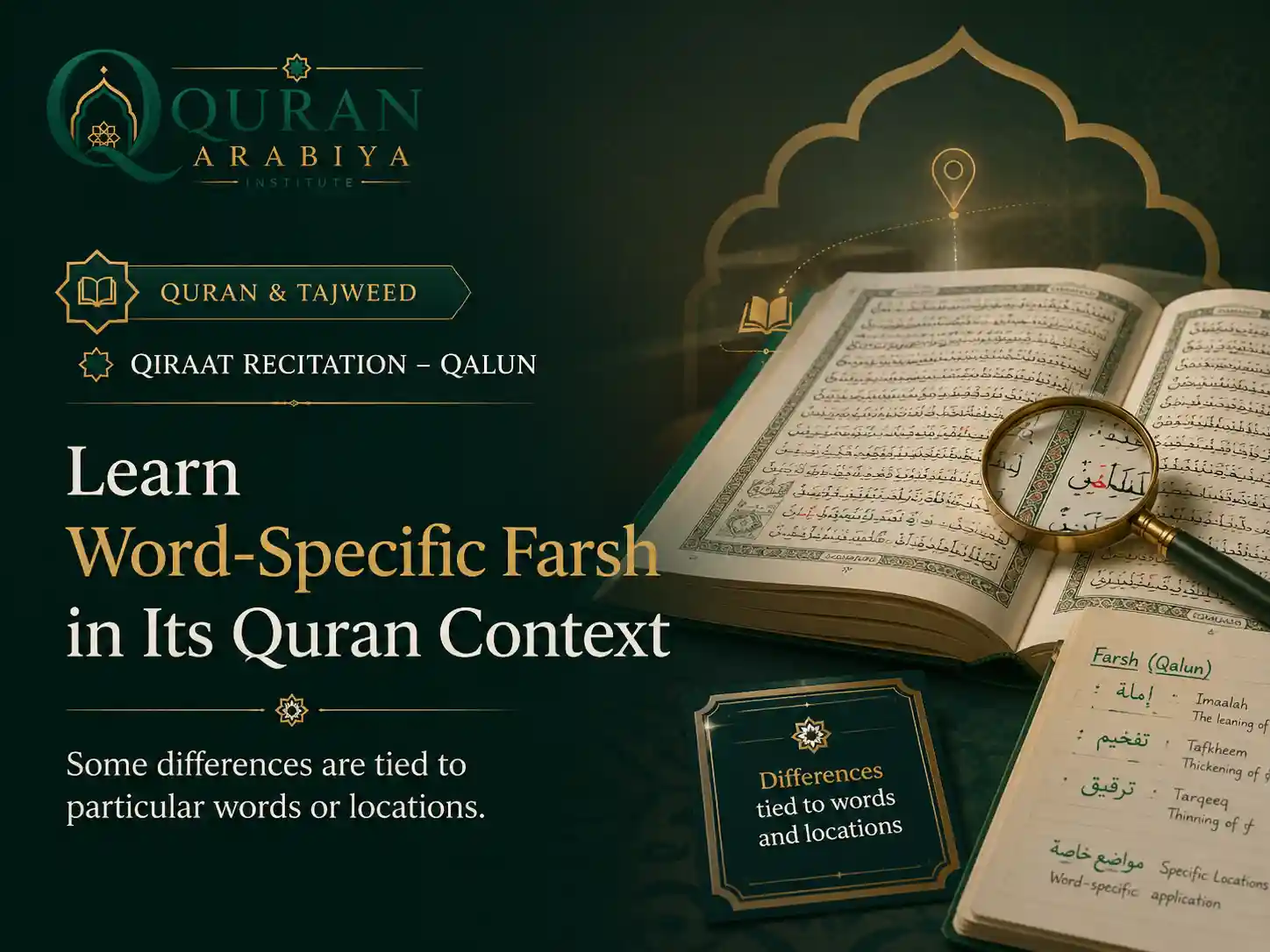
Some differences are tied to particular words or locations. These are best learned where they occur. The teacher can mark the location, listen to the recitation, connect it to the transmission note and revisit it later. Context reduces accidental transfer from another Riwayah.
MapAttributeReciteRetest
Qalun recitation course - 2
Qalun recitation course - 3

Read from Appropriate Qalun Materials and Train the Ear

A Qalun reading course online benefits from a Mushaf/material set appropriate to the selected Riwayah and reliable reference recitation chosen by the teacher. Reading, listening and oral correction should point in the same direction while new habits are being formed.
MapAttributeReciteRetest

Compare with Hafs Only to Clarify—Never to Mix

For learners coming from Hafs ‘an ‘Asim, brief contrast may explain why a familiar choice must change. The purpose is separation, not blending. The learner should be asked to sustain a passage in Qalun and correct any point where the previous Riwayah leaks into the new one.
Compare with Hafs

Use comparison only when it clarifies the Qalun form. The teacher keeps Qalun coherent as one Riwayah and tests the point in sustained recitation, while keeping the correction target narrow and clear. Move forward when Qalun remains consistent across longer passages without mixing.
Qalun recitation course - 4

Move from Rule Recognition to Sustained Qalun Recitation

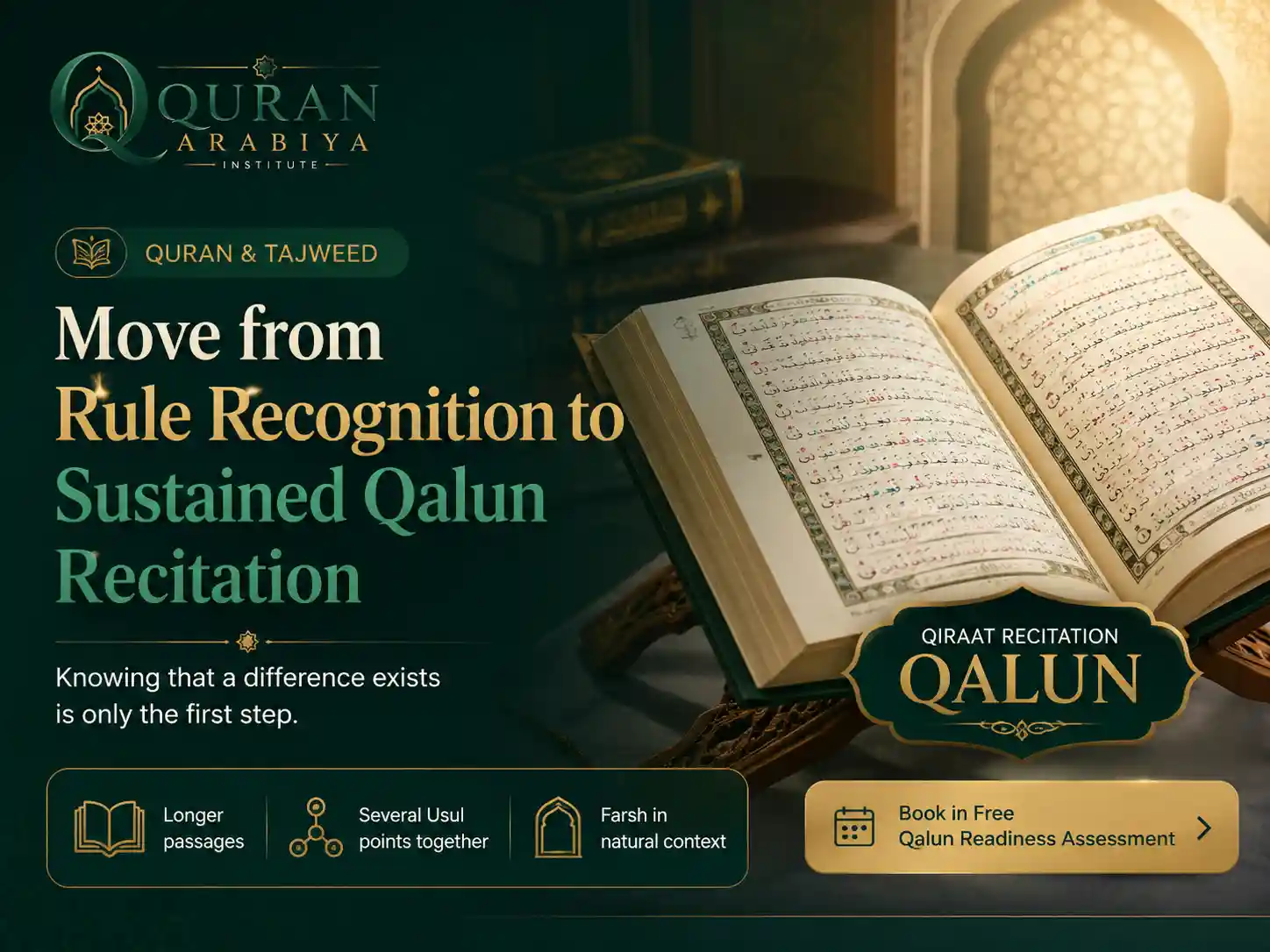
Knowing that a difference exists is only the first step. The learner needs to maintain Qalun through longer passages where several Usul and Farsh points appear together. That is where learn Qalun recitation becomes a performance skill rather than a list of notes.
ListenModelApplyTransfer

Decide Whether Your Goal Is Study, Full Khatmah or Wider Qiraat

Some students want a structured introduction; others want a full supervised recitation; advanced learners may want wider Qiraat study. These are different scopes. The assessment should clarify the goal before the plan is confirmed.

What Progress Should Look Like

Correct understanding of Qalun’s place in the transmission map.
A route-specific map of recurring principles and contextual differences.
Reduced mixing with the learner’s previous Riwayah.
Increasingly sustained Qalun recitation with fewer prompts.
A clear next step toward fuller Qalun or wider Qiraat study.

Start with a Free Trial

Request a free Qalun readiness assessment. Recite in the Riwayah you currently know and explain your goal so the teacher can decide whether to begin Qalun, strengthen Tajweed first or recommend wider Qiraat study.

Frequently Asked Questions

Qalun is a famous Riwayah transmitted from Imam Nafi‘, who is one of the ten canonical Imams.

Not as a universal rule. What matters is enough reading/Tajweed stability to learn a new Riwayah without mixing.

No. This page is intentionally focused on Qalun.

Formal Ijazah depends on the qualified teacher, selected route and accepted standard; it should not be promised for attendance.

Because advanced Riwayah details depend on disciplined transmission and route context; the specialist teacher should teach the exact rules accurately.

The teacher can check Tajweed, current Riwayah habits and whether the learner can keep a new transmission system coherent without mixing. The result determines whether to begin Qalun directly or prepare first.

Recurring principles should be built into a personal map with conditions and Quran examples. The map is then tested through sustained Qalun recitation rather than kept as a chart only.

Word-specific variations are attached to their Quran locations, attribution and oral performance. This helps the learner remember the form without detaching it from the Surah context.

A limited comparison can clarify a difference the learner is likely to mix. The teacher should then return immediately to consistent Qalun recitation so comparison does not become uncontrolled mixing.

Use materials appropriate to the taught Qalun route and the teacher’s method. The exact Mushaf, matn or reference should be confirmed with the specialist teacher rather than assumed from a generic page.

Yes. This page intentionally owns one Riwayah and can be studied as a coherent specialist route without turning every lesson into broad Ten-Qiraat comparison.

Yes. Some learners want structured study or sustained recitation practice without pursuing formal authorization. The route should be clear from the beginning.

Move when Qalun is sufficiently controlled and your goal genuinely expands to comparative study across recognized readings. The Ten Qiraat page should own that broader intent.

No. If an Ijazah route is offered, authorization depends on the qualified teacher accepting the recital and the exact route requirements.

KEEP LEARNING

Continue with a Course That Fits Your Next Step

Start the Right Quran Path with a Free Trial

Use the assessment to confirm whether Qiraat Recitation – Qalun is the right route for the learner’s current level and goal.
Chat with us