The child needs to hear the target feature clearly before trying to reproduce it. The teacher models it clearly, guides a short attempt, then returns to a real ayah for application, while keeping the correction target narrow and clear. Move forward when the child can keep the correction at normal reading pace.

Compare difficult Arabic sounds and train the physical articulation difference. The teacher models it clearly, guides a short attempt, then returns to a real ayah for application, while keeping the correction target narrow and clear. Move forward when the child can keep the correction at normal reading pace.
Introduce appropriate recurring patterns inside real ayat.

Notice exactly what changed in the sound or rule. The teacher models it clearly, guides a short attempt, then returns to a real ayah for application, while keeping the correction target narrow and clear. Move forward when the child can keep the correction at normal reading pace.

The child needs enough reading readiness to benefit from rule application. If decoding is the main problem, strengthen reading first.
Useful terminology can be taught, but accurate application matters more than memorized definitions.
No. Hifz is a separate primary goal; use the Kids Hifz page for structured memorization.
In a live one-to-one lesson the teacher can model a sound, hear the child immediately, isolate the error and repeat the correction.
Yes. The assessment can identify what is already stable and which recurring errors need targeted work.
The teacher can listen to a short passage and separate basic reading problems from pronunciation and rule-application problems. That prevents the child from being asked to carry formal Tajweed on top of unstable decoding.
The exact order depends on what the child already meets in recitation, but age-appropriate work may include recurring Noon Sakinah and Tanween, Meem Sakinah, Ghunnah and Madd patterns. The Quran stays at the center of practice.
The teacher can isolate a sound, contrast it with the sound the child confuses, model the articulation and then return to Quran words. The correction is tested again at normal reading pace so it becomes usable.
Yes, once target sounds and rules are reliable enough. Longer reading is important because it shows whether a correction survives when fluency, breath and several rules compete for attention.
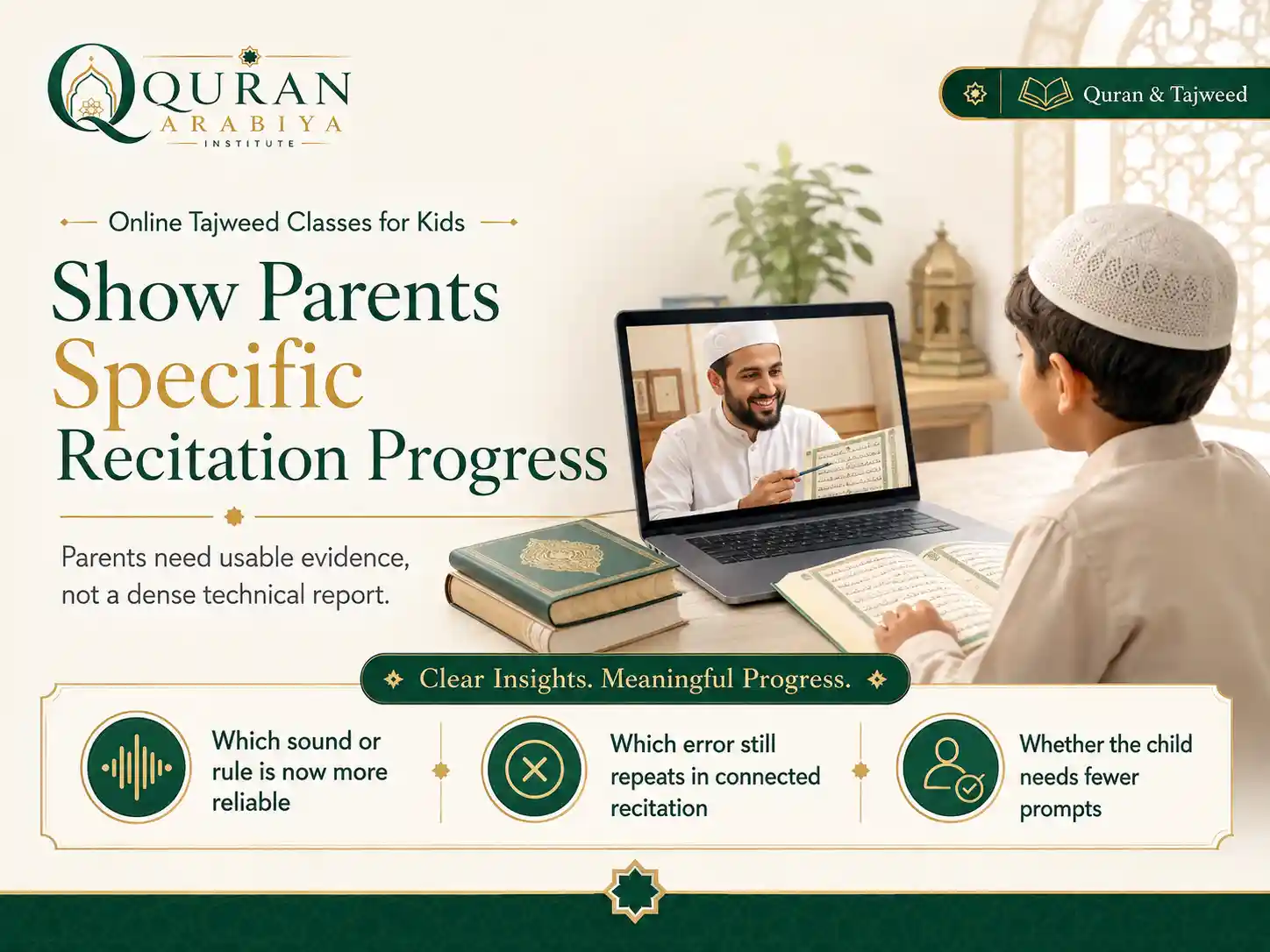
A small recurring-error list can be revisited across sessions and new Quran examples. Progress is visible when the same mistake appears less often and the child begins to self-correct with fewer prompts.
Yes. The teacher can keep explanations short, use listening and imitation, then move quickly into Quran examples. The lesson should prioritise one or two high-impact corrections instead of presenting many rule names at once.
Hifz can be added when core recitation accuracy is stable enough that repetition will not fix recurring pronunciation mistakes into memory. The dedicated Kids Hifz page should own the deeper memorization goal.
Yes. Parents can reinforce the specific sound, rule or short passage assigned by the teacher without trying to become a second Tajweed teacher. Clear, narrow targets are usually easier to support.
Yes. Share the child’s age, level, goals, time zone and teacher preference during matching. The final match depends on current availability and suitability for the learner.