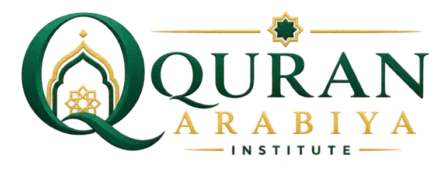
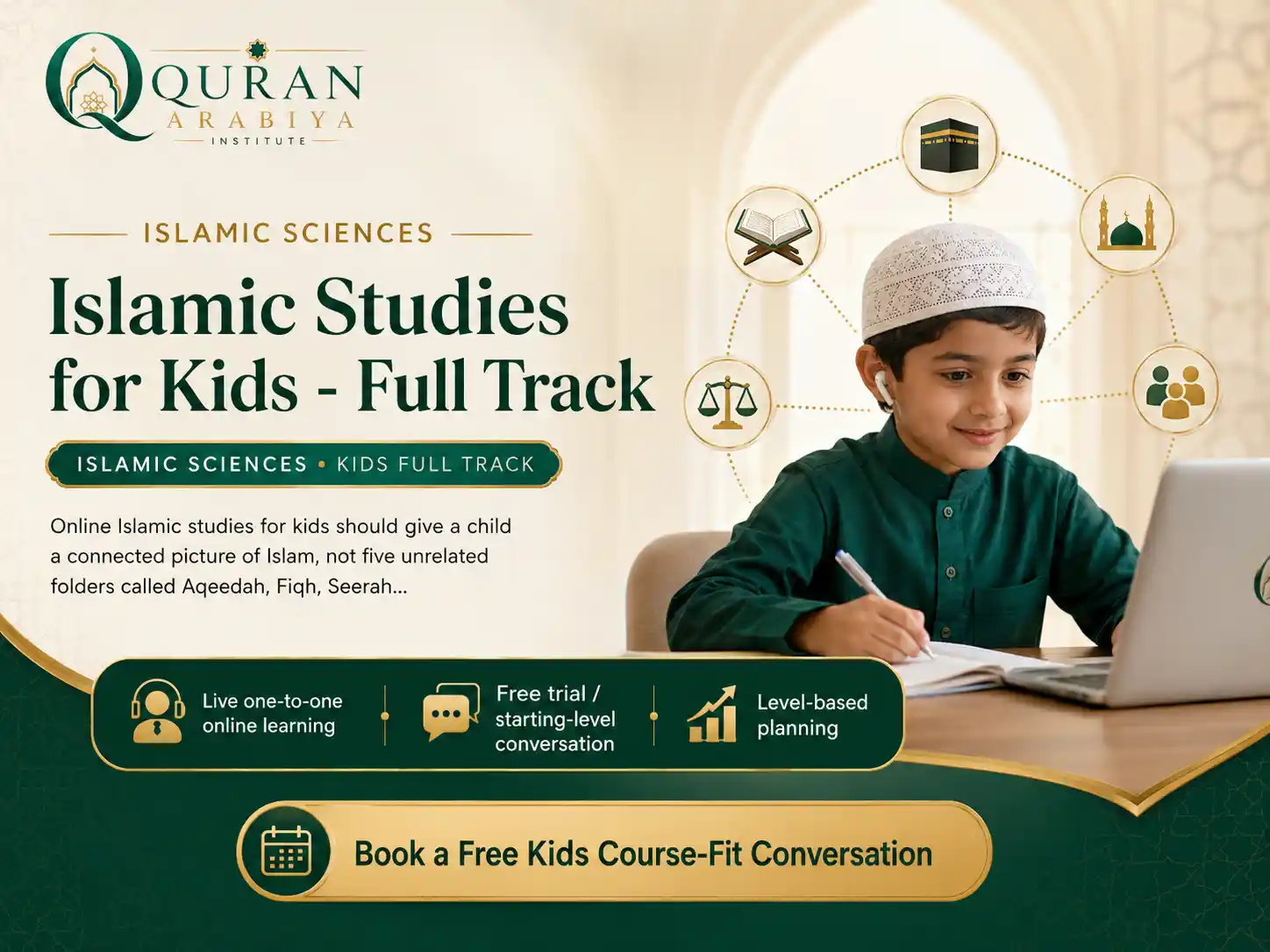
Online Islamic studies for kids should give a child a connected picture of Islam, not five unrelated folders called Aqeedah, Fiqh, Seerah, Hadith and manners. A child needs to understand what Muslims believe, how belief shapes worship, how the Prophet’s life gives those ideas a human example, and how Islamic character appears at home, school and with friends.
At Quran Arabiya Institute, the broad track is designed as Islamic classes for kids online that can be adjusted to age, current knowledge and family goals. The free trial gives the teacher and parent a starting point: what the child already understands, what is only memorized without meaning, what practical habits need support, and which topic should come first.
Islamic education for children becomes easier to remember when subjects reinforce one another. A lesson about belief in Allah can connect to gratitude; a Seerah moment can illustrate patience; a Hadith can become a rule for speech; a Fiqh lesson can explain what the child is already doing in Salah. The curriculum should therefore move in connected units rather than switching topics without a clear reason.
This is the core difference between a broad Muslim kids Islamic studies pathway and a specialist course. The goal here is breadth with coherence: enough Aqeedah, worship, Seerah, Hadith and Adab to build a usable map of the faith, while deeper study stays on dedicated pages.
Islamic education for children becomes easier to remember when subjects reinforce one another. The curriculum should therefore move in connected units rather than switching topics without a clear reason. The aim is to understand the principle clearly enough to recognize where it applies.
An age-appropriate Islamic studies curriculum for kids can include simple foundations of Iman, the meaning and practice of core acts of worship, key events from the life of Prophet Muhammad, carefully selected Prophetic teachings, duas and everyday manners. The exact sequence should reflect the learner rather than force every child through the same amount of material.
Younger children may work through short explanations, stories and one practical takeaway. Older children can handle clearer terminology, evidence, comparison of situations and more independent reflection. The content grows with the child instead of repeating the same “basics” in the same form every year.
The educational goal is structured understanding, not case-specific religious or legal advice. Personal rulings should remain with an appropriately qualified scholar who knows the actual case.
Children often know the correct answer in a worksheet but struggle to recognize the same principle in real life. A useful Islam classes for kids lesson asks what honesty looks like when a friend pressures them, what respect looks like in disagreement, or how intention changes an ordinary action. Practical scenarios turn abstract language into a decision the child can actually understand.
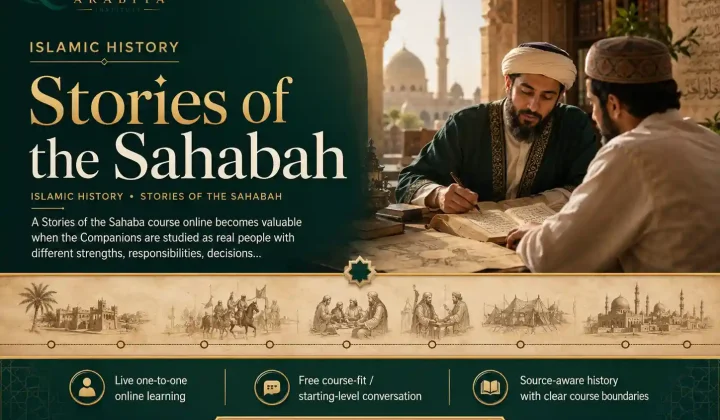
This is also where Seerah and Hadith become more than stories to retell. The teacher can ask what the example teaches, what choice it changes, and how the child could try one small action before the next lesson.
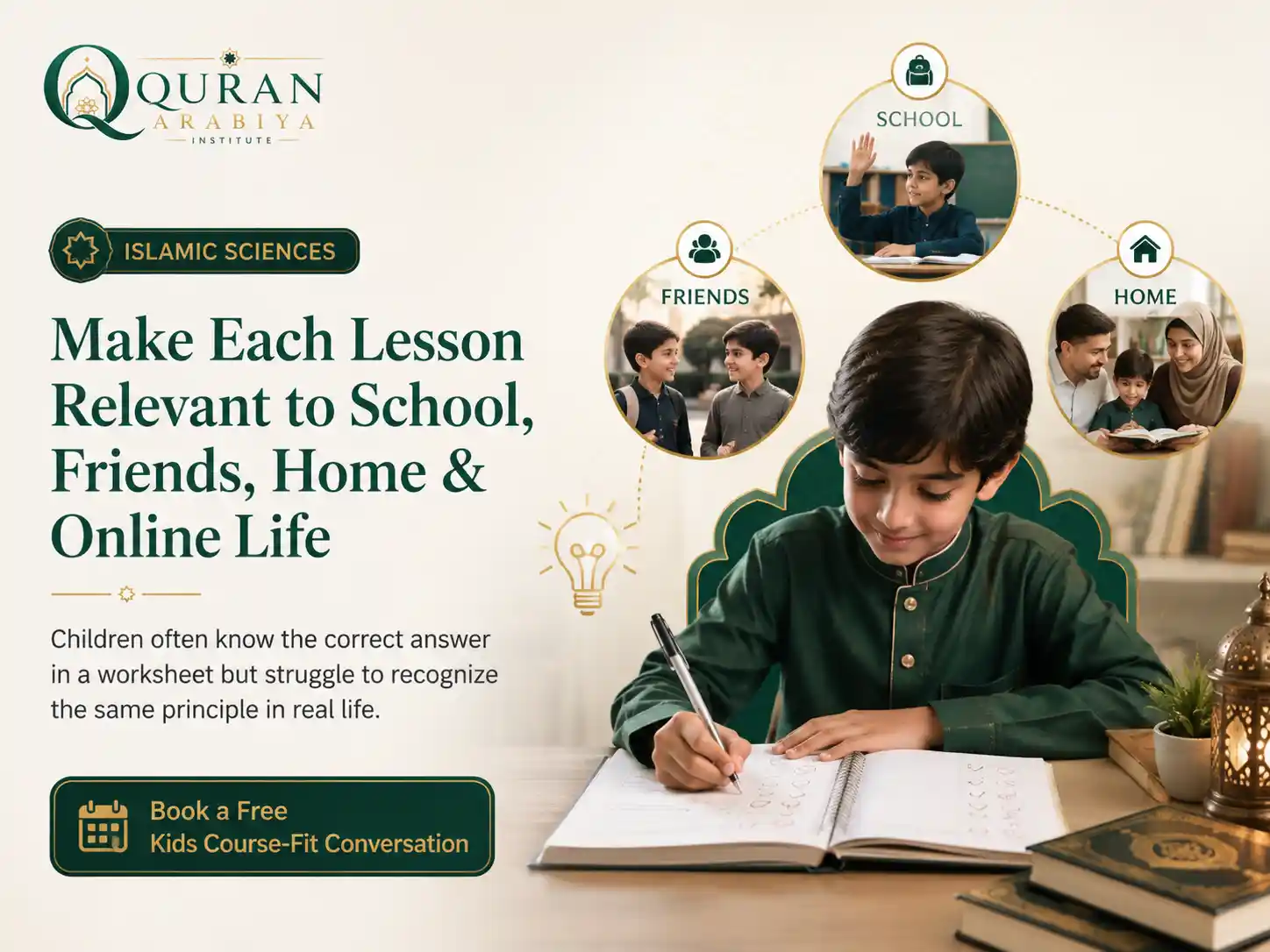
Children often know the correct answer in a worksheet but struggle to recognize the same principle in real life. A useful Islam classes for kids lesson asks what honesty looks like when a friend pressures them. The aim is to understand the principle clearly enough to recognize where it applies.
Private teaching allows the teacher to spend less time on material the child already knows and more time where understanding is weak. One learner may need very simple vocabulary; another may be ready for evidence and deeper questions. The learning goal can stay meaningful while the explanation changes.
Age-appropriate does not mean shallow. It means the concept, example, language and task match the learner’s current ability so that the child can think rather than simply repeat.
Parents need more than “we finished three lessons.” Useful progress can be described through observable outcomes: the child can explain the difference between a belief and an act of worship, remembers the sequence of Wudu, recognizes a Seerah lesson in a scenario, or applies one Adab habit more consistently.
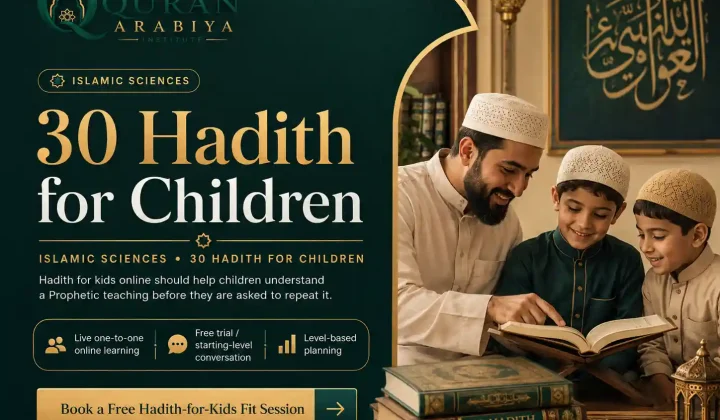
Parent feedback can also identify the next bottleneck. If the broad track reveals that Salah knowledge is weak, the teacher can recommend focused worship work. If the child is ready for concentrated Hadith learning, the 30 Hadith for Children page becomes the next route rather than duplicating that course inside this page.
A useful checkpoint is to explain the idea in the learner’s own words, identify one example, and know when a deeper specialist course is the better next step.
Private teaching allows the teacher to spend less time on material the child already knows.
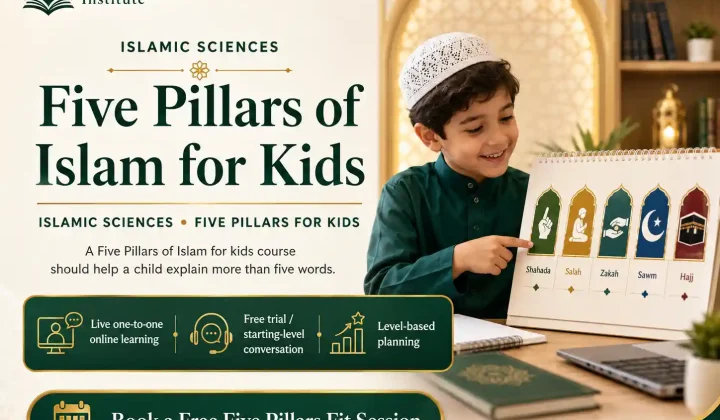
A broad program should not try to keep every learner forever. Some children eventually need a concentrated goal. Five Pillars of Islam for Kids is a better fit when the immediate need is understanding Shahadah, Salah, Zakat, fasting and Hajj. Hadith for kids online is a better fit when the family wants a selected Prophetic-teachings route.
This honest routing protects learning quality and SEO clarity at the same time: the full track remains the general Islamic foundation, while specialist pages own specialist intent.
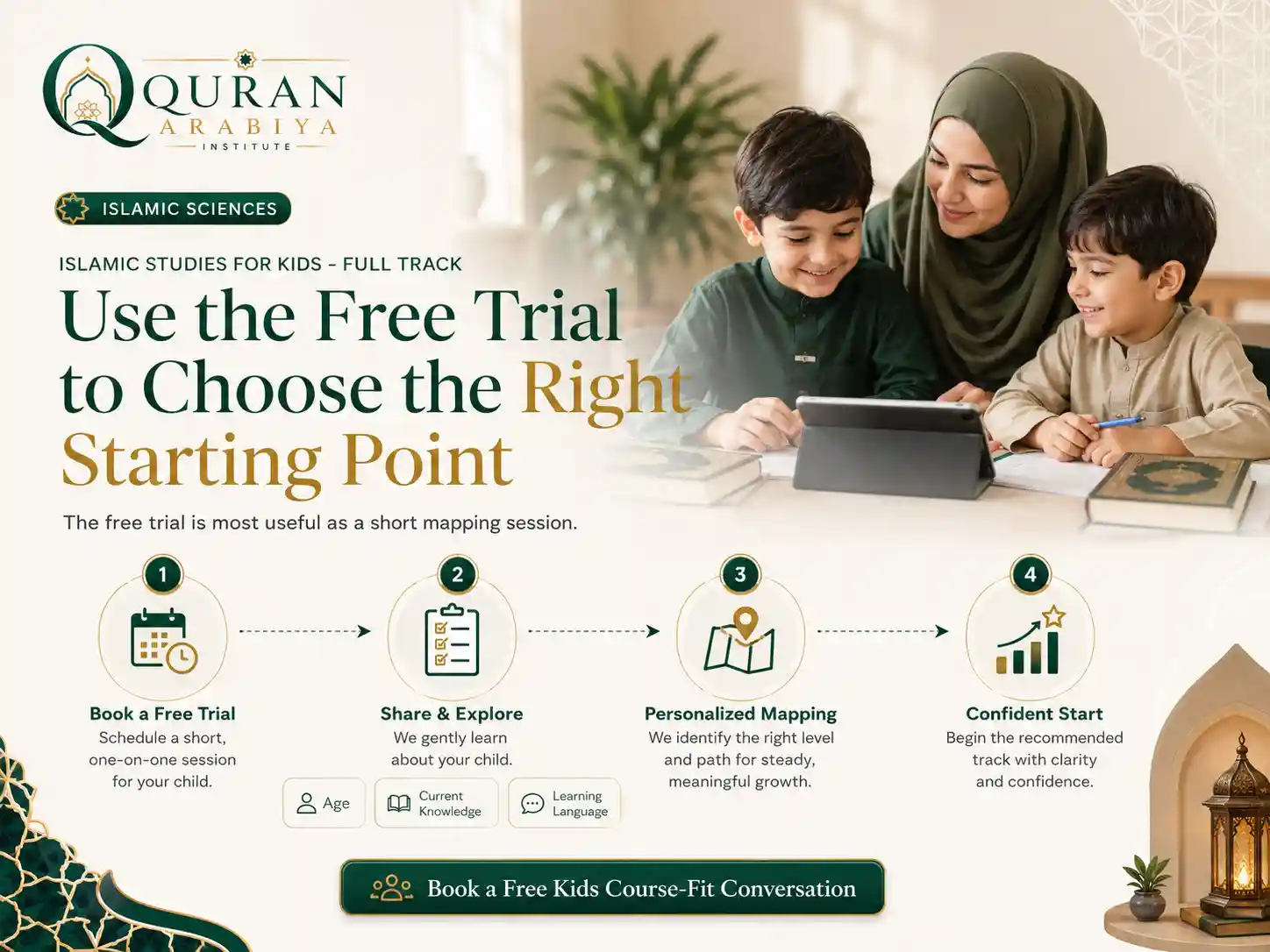
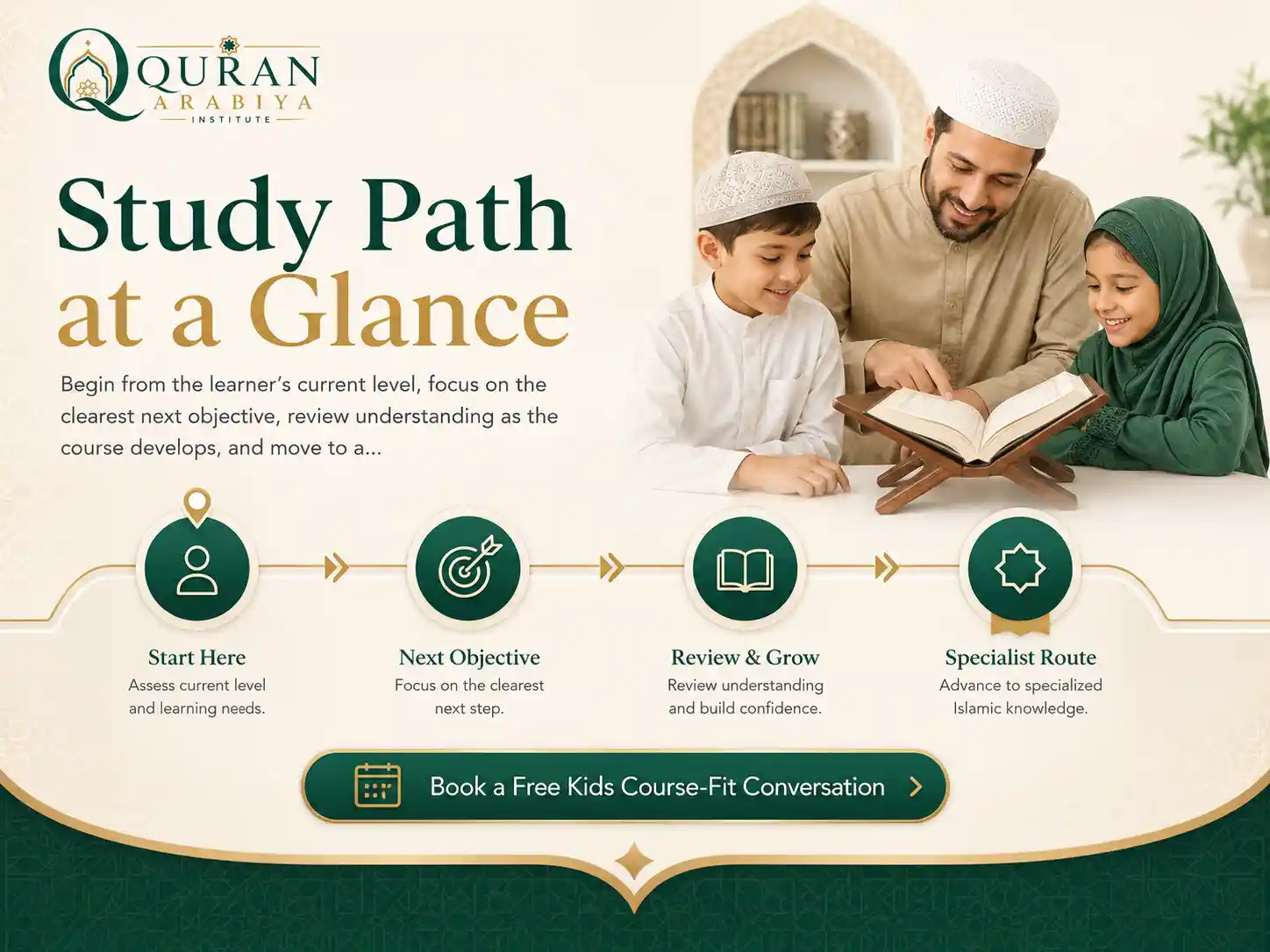
The free trial is most useful as a short mapping session. The parent can explain the child’s age, current knowledge, learning language, attention pattern and family priorities. The teacher can then check understanding with a few age-appropriate questions instead of assuming that school year or age automatically equals a level.
The result should be a sensible first focus and a clear explanation of why it comes first. That gives the family a better basis for choosing the broad course or a more focused Islamic Studies route.
Can explain core Islamic concepts in age-appropriate language rather than only repeat labels.
Connects belief, worship, Prophetic examples and manners as parts of one faith.
Shows progress through observable understanding and practical application.
Builds enough breadth to identify which specialist subject should come next.
Parents receive a clearer picture of what is understood, what needs review and what to reinforce at home.
Book a free trial to map your child’s current Islamic knowledge, family priorities and learning style, then choose a broad Islamic Studies path or the specialist course that better matches the real need.
The course can be adapted for children and teens. The starting level, language and lesson style should be matched to the learner during the trial rather than decided by age alone.
The broad route can cover age-appropriate Aqeedah, worship/Fiqh, Seerah, selected Hadith, manners and related Islamic foundations. The exact sequence should be confirmed with the teacher.
No. The full track is a broader Islamic foundation. The Five Pillars course is a focused child route for Shahadah, Salah, Zakat, fasting and Hajj.
Yes. One-to-one learning is especially useful when a child needs time to ask questions and have the language adjusted to their level.
Use one small follow-up: ask the child to explain one idea, notice one daily-life example, or practice one agreed habit. Home reinforcement should support the lesson, not turn the parent into a second classroom.
Parents of children/teens who want age-appropriate Islamic learning in English with a teacher who can connect belief, worship, Seerah, Hadith and character to daily life.
The learner does not need to repeat every introductory point automatically. The starting conversation can identify what is already stable, what is only familiar by name and which concept needs the first focused explanation or practice.
Private teaching lets the teacher adjust vocabulary, pace, examples and questioning without changing the academic goal. It also creates space to stop on a misunderstood concept, check it from another angle and continue only when the learner can explain it more independently.
The page follows a defined scope and routes deep sibling intent outward. Do not attempt to rank this page for the dedicated Five Pillars for Kids or Hadith for Kids intents. Mention those subjects as parts of the wider curriculum. This protects both learning clarity and the SEO role of the dedicated specialist courses.
The course can explain relevant evidence and terminology at the level required by the subject, while avoiding claims beyond the confirmed text, teacher or syllabus. High-trust topics remain guided study rather than independent fatwa, hadith grading or personal interpretation.
No. The course gives the learner a structured foundation and helps identify the next priority. When one subject becomes the main goal, the specialist Aqeedah, Fiqh, Hadith, Tafsir, Adab or other dedicated route should take over rather than being compressed into one page.
The trial can identify current knowledge, goals, preferred depth and the most suitable route before regular enrollment. It is used as a placement and fit step, not as guaranteed certification, a fatwa session or a promise of fixed completion time.
Progress should be visible in understanding and application rather than chapters finished. A useful checkpoint is whether the learner can can explain core islamic concepts in age-appropriate language rather than only repeat labels. connects belief, worship, prophetic examples and manners as parts of one faith.
The next step should follow the skill or science that becomes dominant. Own the broad child Islamic Studies hub. The page should show how Aqeedah. Once that role has been fulfilled, the teacher can recommend the most relevant specialist route instead of expanding the course beyond its intended scope.
If you are considering online Islamic studies for kids, begin with the concept or study gap that matters most now. The free trial can clarify your current level, intended depth and best-fit route without inventing a certificate, fixed duration or specialist ruling that has not been verified.