A Five Pillars of Islam for kids course should help a child explain more than five words. Families who want their child to learn Five Pillars for kids need more than five labels: Shahadah, Salah, Zakat, fasting and Hajj form a practical framework of Muslim life, and children understand them better when each pillar is connected to something they can see, ask about and gradually practise with family.
This is a focused Islamic basics for kids course. It does not replace the full Islamic Studies track, and it does not need adult Fiqh depth. Quran Arabiya Institute can use simple language, stories, visuals, questions and family examples to help children understand why each pillar matters.
Before asking the child to memorize a list, the teacher can explain that a pillar supports a structure. The Five Pillars are foundational acts that shape Muslim worship and community life.
A simple analogy gives the learner a reason to remember the list and prepares them to see how the pillars are connected.
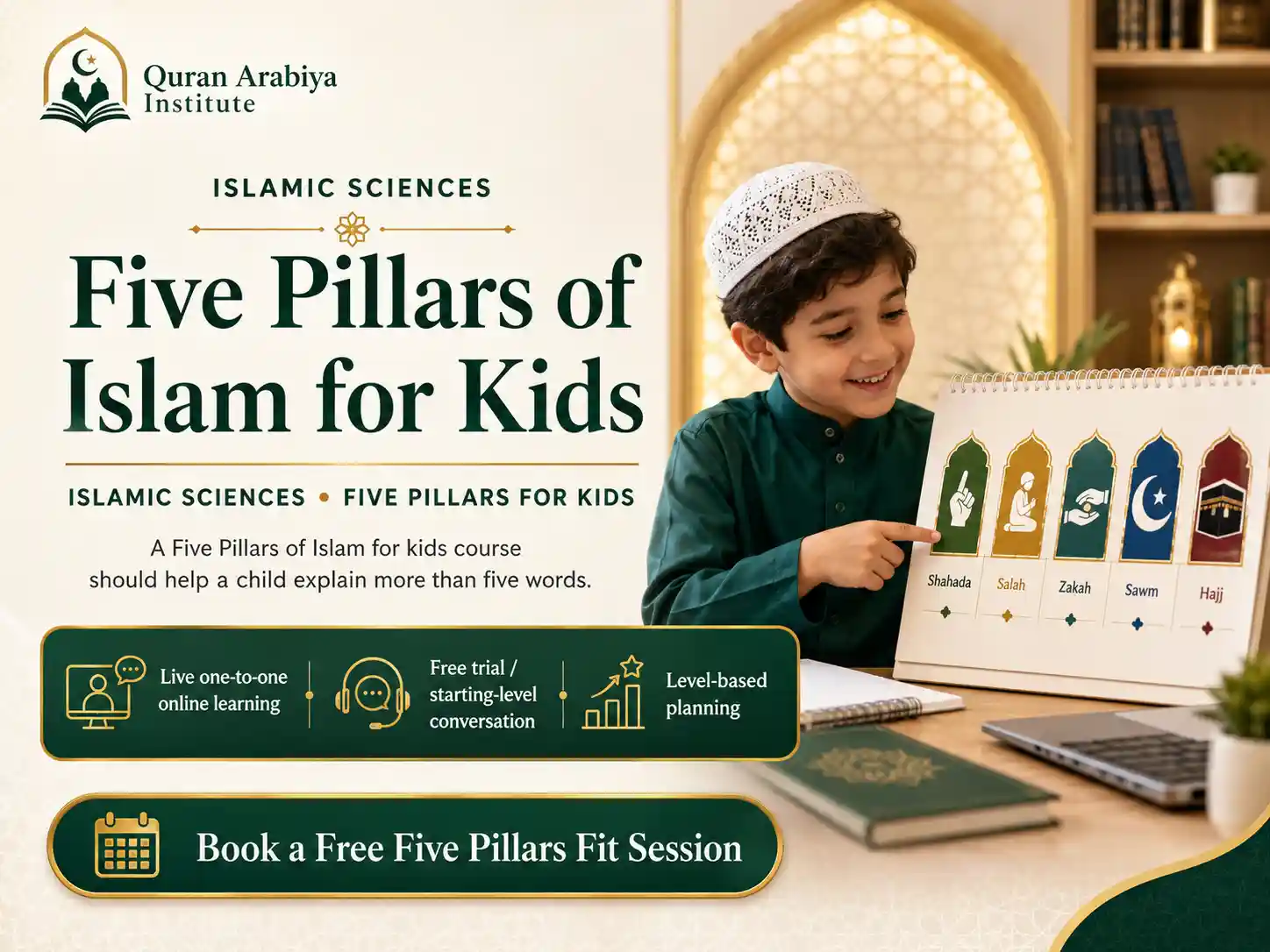
Before asking the child to memorize a list, the teacher can explain that a pillar supports a structure. The Five Pillars are foundational acts that shape Muslim worship and community life. The aim is to understand the principle clearly enough to recognize where it applies.
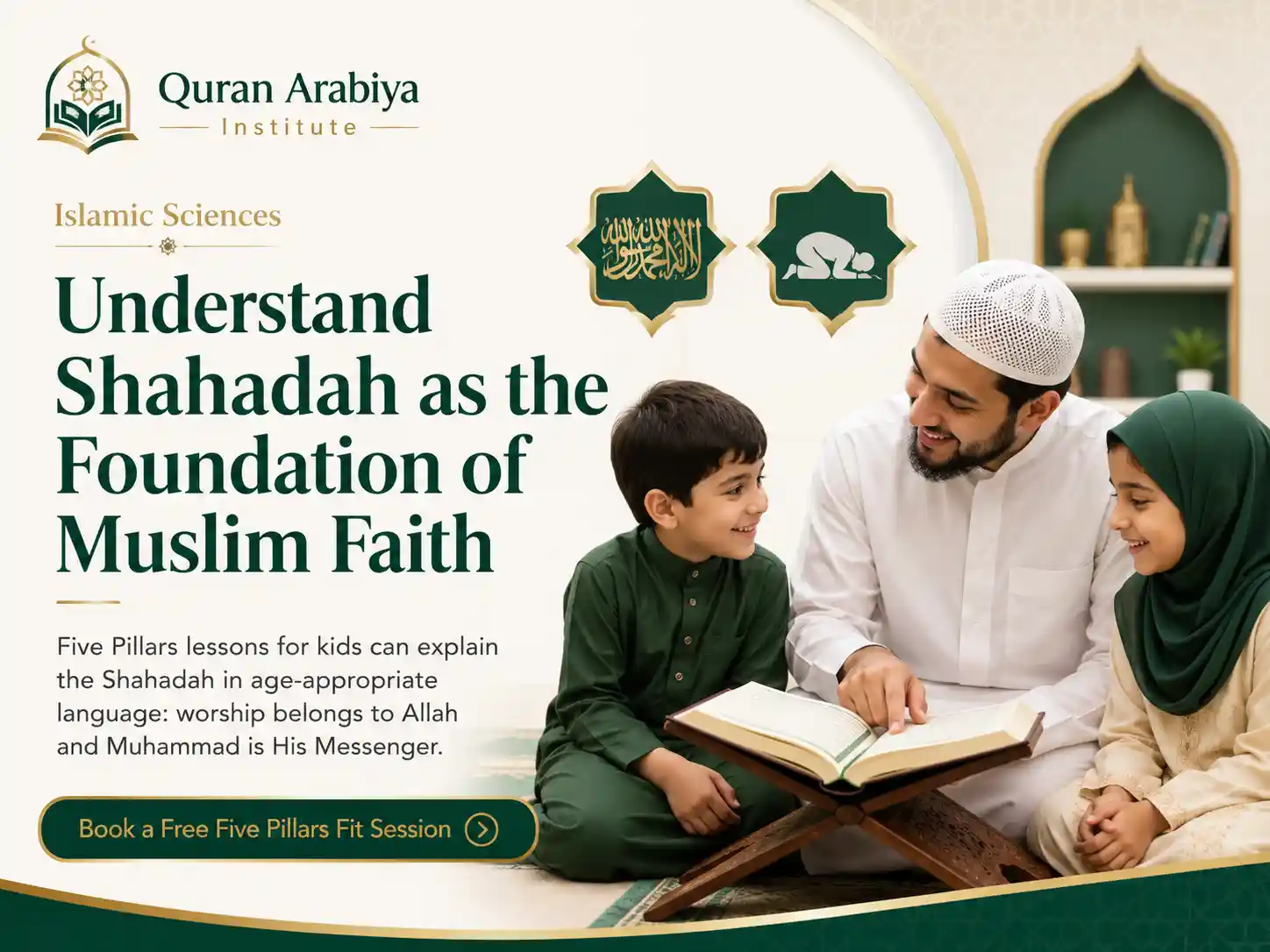
Five Pillars lessons for kids can explain the Shahadah in age-appropriate language: worship belongs to Allah and Muhammad is His Messenger. The exact wording can be taught carefully while the meaning remains central.
Older children can discuss how belief changes choices; younger children may focus on the simple core idea and love of Allah and His Messenger.
A useful checkpoint is to explain the idea in the learner’s own words, identify one example, and know when a deeper specialist course is the better next step.
Salah is easier to understand when children connect it to times of day, preparation, standing before Allah and the family prayer routine. The course can introduce purpose and basic structure without becoming an advanced prayer-Fiqh class.
If a child needs detailed correction of prayer rulings, that can later be routed to a more focused worship path.
Salah is easier to understand when children connect it to times of day, preparation, standing before Allah and the family prayer routine. The course can introduce purpose and basic structure without becoming an advanced prayer-Fiqh class. The aim is to understand the principle clearly enough to recognize where it applies.
Zakat can be introduced as an obligatory form of giving with a simple distinction from general charity, without complex wealth calculations. Sawm can be connected to Ramadan, self-control, gratitude and worship, with age-appropriate recognition that legal obligation depends on maturity and circumstances.
The child’s lesson should be meaningful even before they personally carry every adult obligation.
Hajj can be taught through a simple map, key places and the idea of Muslims gathering for worship. Pictures, sequencing activities and family stories can make the pillar memorable without introducing complex juristic differences.
The goal is a clear mental picture that can grow in later study.
A useful checkpoint is to explain the idea in the learner’s own words, identify one example, and know when a deeper specialist course is the better next step.
Zakat can be introduced as an obligatory form of giving with a simple distinction from.
Five Pillars classes for children can use matching, ordering, drawing, scenario questions or “teach it back” tasks. The activity should reveal whether the child knows what a pillar means, not only whether they enjoyed the worksheet.
One-to-one teaching makes it easy to change the activity based on age and attention span, which is especially useful for pillars of Islam lessons for children who learn best through short visual or verbal checks.
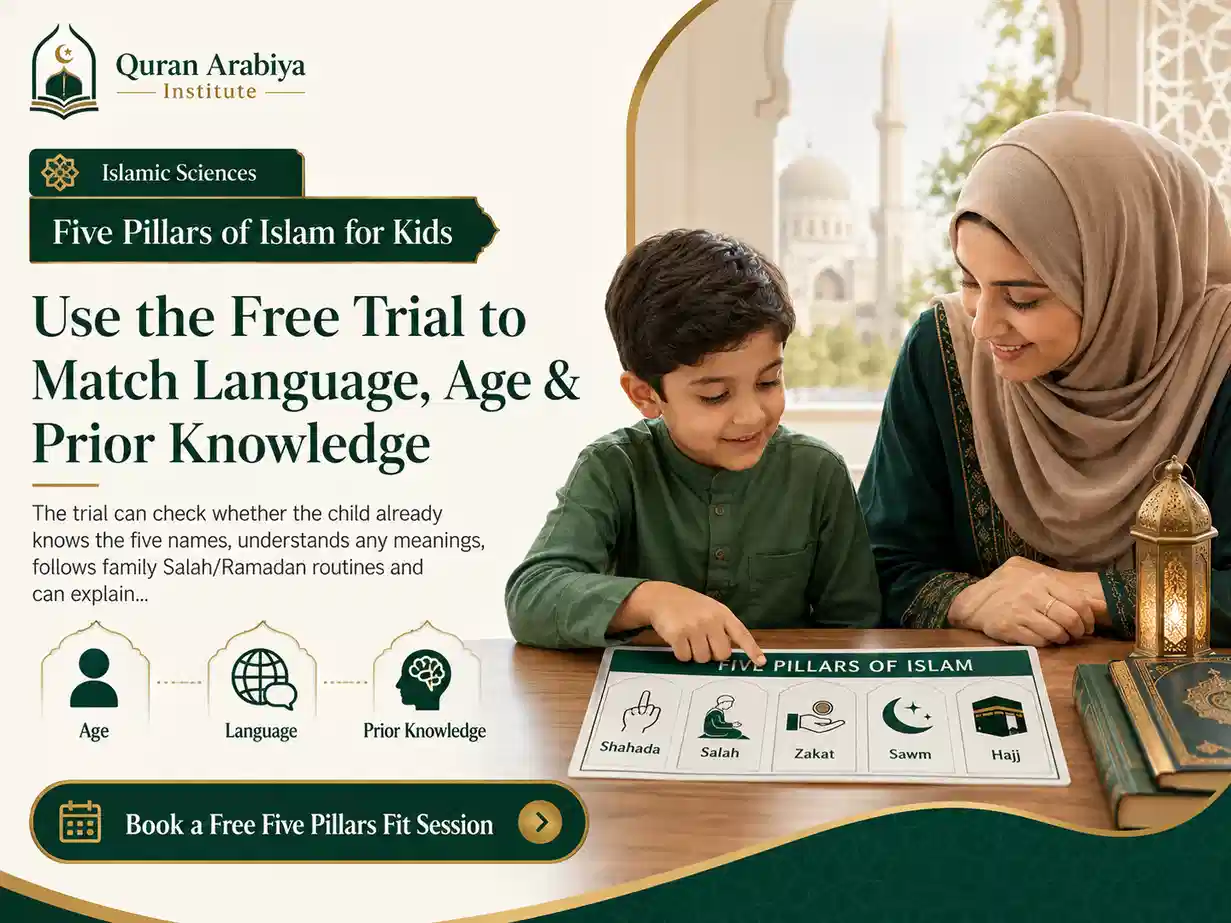
The trial can check whether the child already knows the five names, understands any meanings, follows family Salah/Ramadan routines and can explain concepts in English. The teacher can then decide whether this focused course is enough or the child needs the broader Islamic Studies track.
That keeps both pages useful and non-duplicative.
Can name and explain the Five Pillars in age-appropriate language.
Connects each pillar to a real aspect of Muslim worship/family life.
Understands purpose before being given adult legal detail.
Uses activities to demonstrate meaning, sequence and application.
Parents know how to reinforce pillar concepts through normal family routines.
Book a free trial to check what your child already understands about the Five Pillars and whether a focused pillars course or the broader Islamic Studies track is the best starting point.
Shahadah, Salah, Zakat, Sawm (fasting) and Hajj.
It introduces practical meaning, but it is not an advanced jurisprudence course. Detailed worship Fiqh belongs to a specialist route.
Yes. It can begin with the names and simple meanings, then add detail based on age and prior knowledge.
The course can introduce Salah meaning and basic practice, but a complete prayer-correction curriculum should be confirmed separately if offered.
The full track covers multiple subjects; this page focuses specifically on the Five Pillars.
Parents of young children who need a concentrated foundation in the Five Pillars rather than the broader Islamic Studies curriculum.
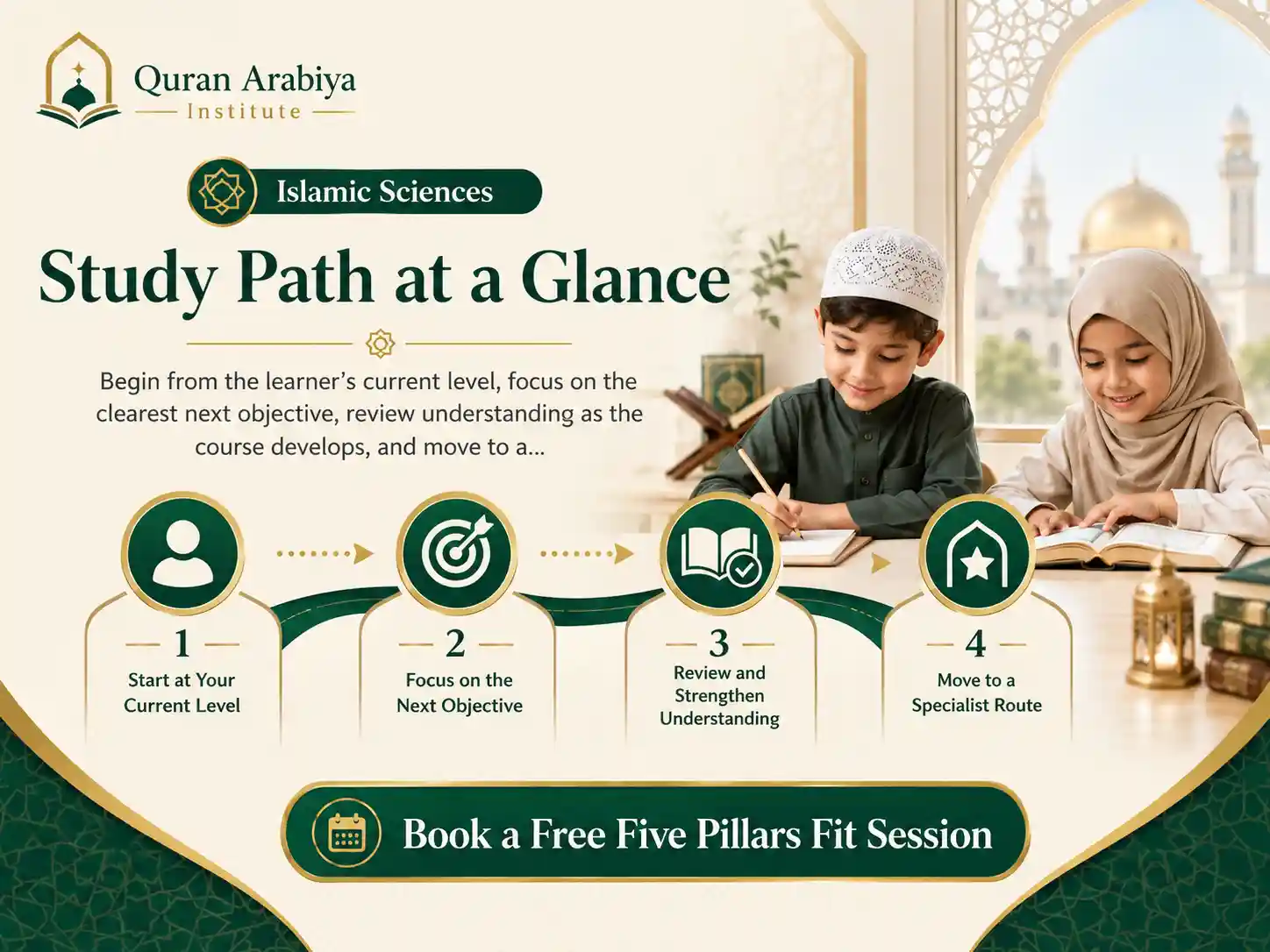
The learner does not need to repeat every introductory point automatically. The starting conversation can identify what is already stable, what is only familiar by name and which concept needs the first focused explanation or practice.
Private teaching lets the teacher adjust vocabulary, pace, examples and questioning without changing the academic goal. It also creates space to stop on a misunderstood concept, check it from another angle and continue only when the learner can explain it more independently.
The course can explain relevant evidence and terminology at the level required by the subject, while avoiding claims beyond the confirmed text, teacher or syllabus. High-trust topics remain guided study rather than independent fatwa, hadith grading or personal interpretation.
No. The course gives the learner a structured foundation and helps identify the next priority. When one subject becomes the main goal, the specialist Aqeedah, Fiqh, Hadith, Tafsir, Adab or other dedicated route should take over rather than being compressed into one page.
The trial can identify current knowledge, goals, preferred depth and the most suitable route before regular enrollment. It is used as a placement and fit step, not as guaranteed certification, a fatwa session or a promise of fixed completion time.
The next step should follow the skill or science that becomes dominant. Own Five Pillars lessons/classes for children and Islamic basics for kids course intent. The kids full track remains broad; Fiqh of Worship remains adult/advanced jurisprudential depth. Once that role has been fulfilled, the teacher can recommend the most relevant specialist route instead of expanding the course beyond its intended scope.
If you are considering Five Pillars of Islam for kids course, begin with the concept or study gap that matters most now. The free trial can clarify your current level, intended depth and best-fit route without inventing a certificate, fixed duration or specialist ruling that has not been verified.