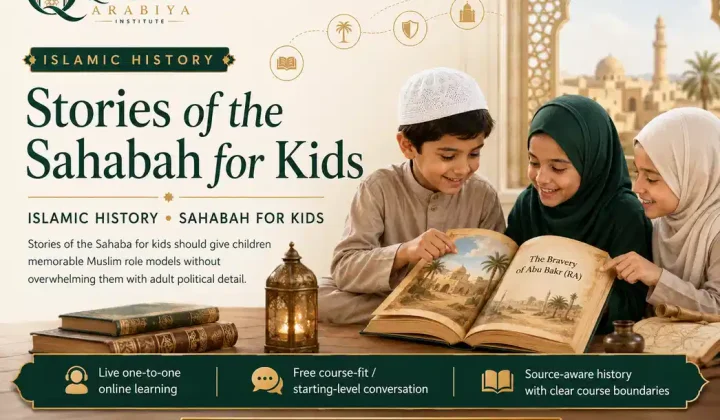
Stories of the Sahaba for kids should give children memorable Muslim role models without overwhelming them with adult political detail. Each lesson can center on one Companion, one understandable event, one character idea and one recall task so the child is able to retell what happened before moving to the next story.
The teaching depth changes with age: younger learners may need short narration and a picture-free timeline or name card, while older children can compare choices, ask why a Companion acted as they did and connect the story to daily habits. The page stays child-focused rather than competing with the general Sahabah biographies course.
Stories of the Sahaba for kids should introduce real people before abstract virtue words. A child remembers that someone shared, spoke the truth, learned carefully, stayed brave or helped another person when the story makes the choice visible.
The goal is not to compete with fictional superheroes by exaggerating the Sahabah. Their lives are meaningful because their faith shaped real decisions, relationships and sacrifices.
For families searching for companions of Prophet for kids, the useful question is not how many biographies can be covered, but whether the child can remember who the Companion was, what happened and what one lesson means in daily life.
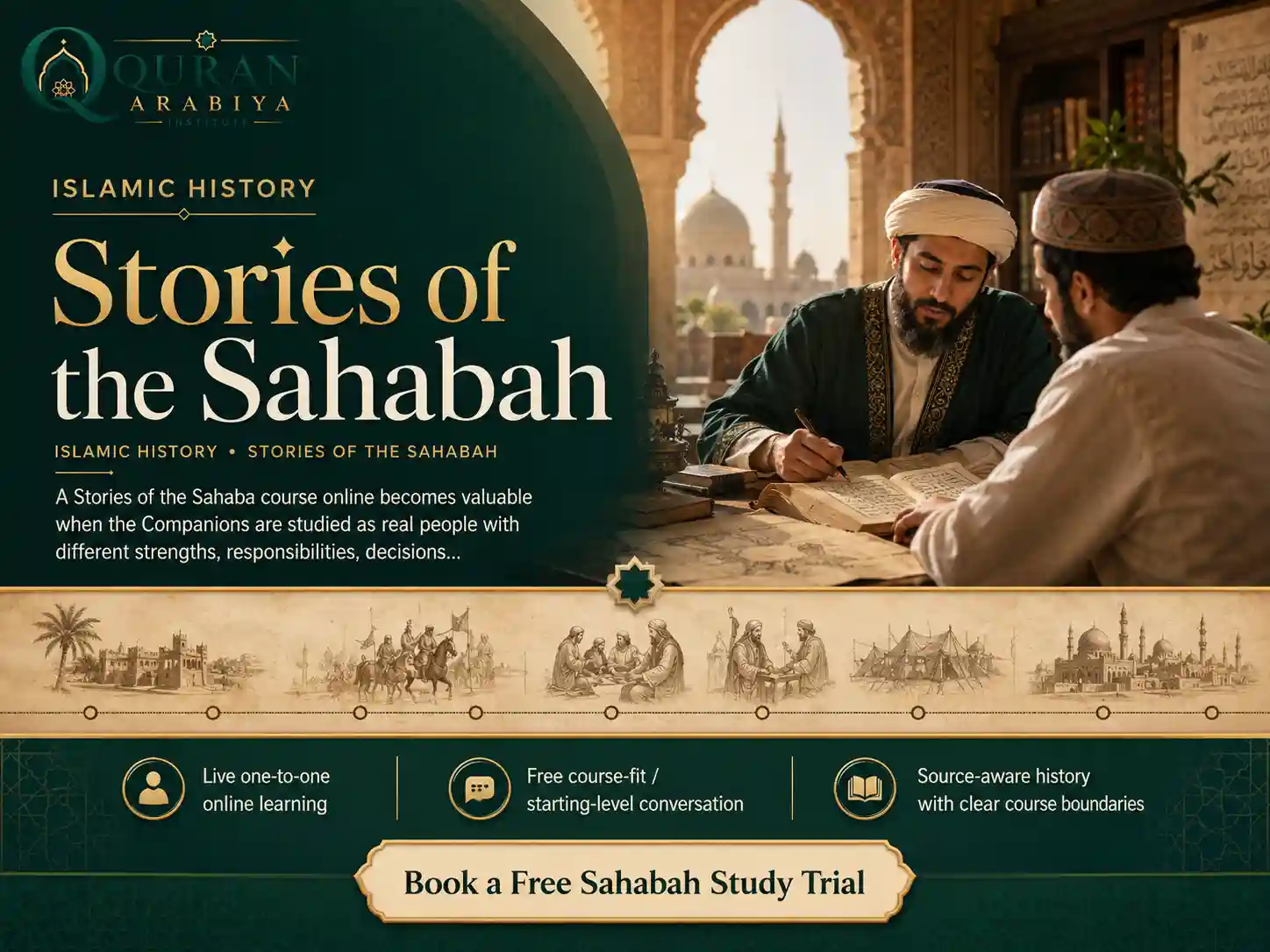
Stories of the Sahaba for kids should introduce real people before abstract virtue words. A child remembers that someone shared, spoke the truth, learned carefully, stayed brave or helped another person when the story makes the. The aim is to connect the detail to its wider chronology and historical context.
Young learners can lose the lesson when a class introduces too many names, dates and moral points at once. A focused lesson can tell one manageable story, explain the key context and finish with a question such as 'What did this companion choose?' or 'What made that choice difficult?'.
This makes Sahaba stories for children easier to retell and gives the teacher a real understanding check rather than assuming silence means comprehension.
The section should finish with one short recap in the learner’s own words so the new detail stays connected to the wider historical framework.
Some companion biographies include persecution, war, loss and political tension. Children can learn about courage and sacrifice without graphic detail or adult-level controversy. Older children can gradually receive more context as their emotional and historical understanding grows.
Age-appropriate teaching means choosing the right detail and vocabulary, not inventing a softer version of history.
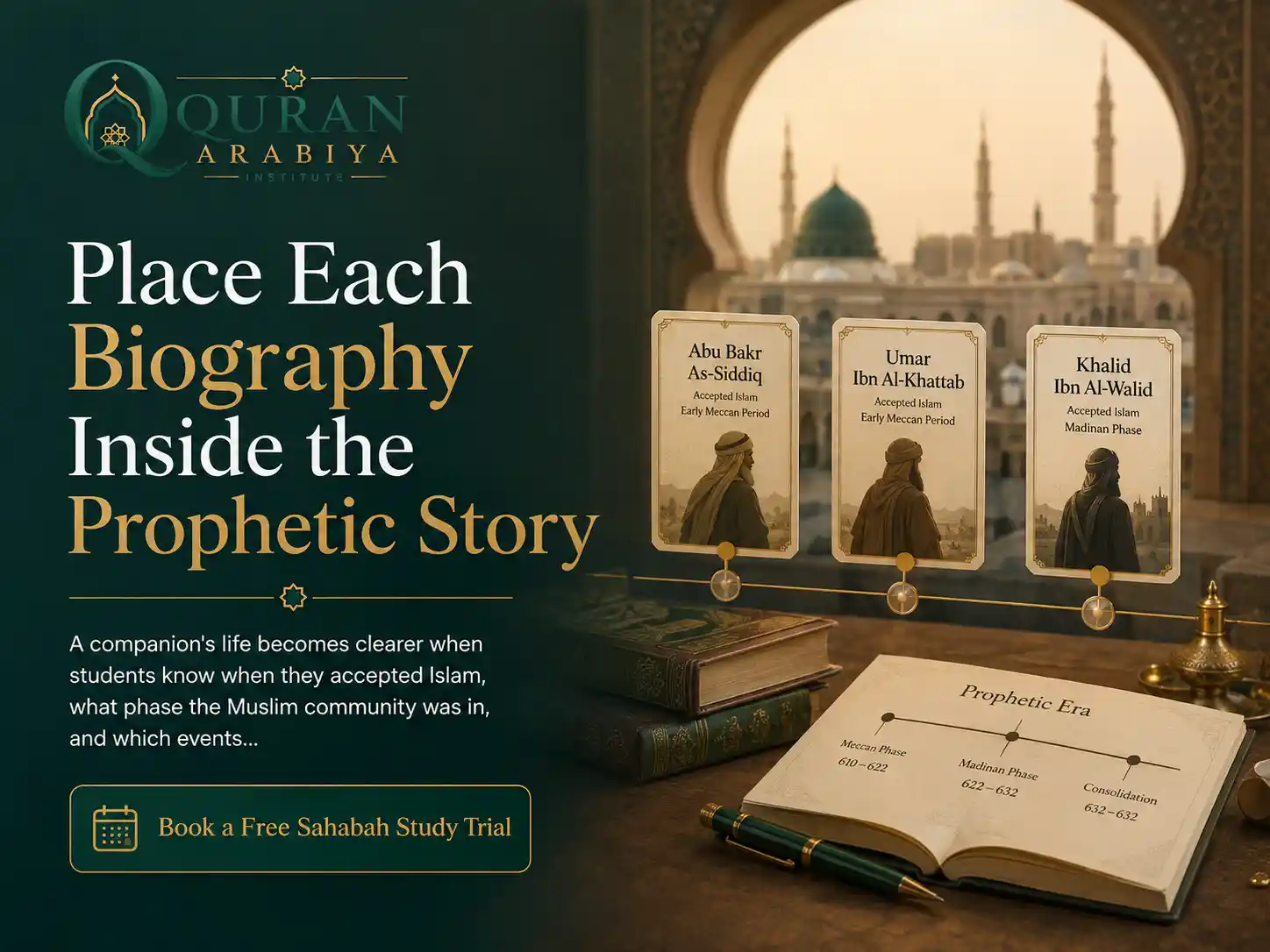
Some companion biographies include persecution, war, loss and political tension. Children can learn about courage and sacrifice without graphic detail or adult-level controversy. The aim is to connect the detail to its wider chronology and historical context, with guided discussion checking understanding before the learner moves deeper.
A Sahabah lessons for children course becomes practical when the teacher asks where the same value appears today. What does honesty look like in homework? What does courage look like when friends pressure you? What does generosity look like when you only have a small amount to share?
The connection should stay modest and realistic. One small action is more useful than asking a child to imitate an adult historical sacrifice literally.
Retelling is one of the simplest ways to test understanding. The learner can name the companion, explain what happened in order, identify the main choice and state the lesson in their own words.
For younger children, the teacher can use three prompts. Older learners can compare two companions who showed the same value in different circumstances. This turns companions stories for kids into cumulative learning instead of weekly entertainment.
The section should finish with one short recap in the learner’s own words so the new detail stays connected to the wider historical framework.
A Sahabah lessons for children course becomes practical when the teacher asks where the same.
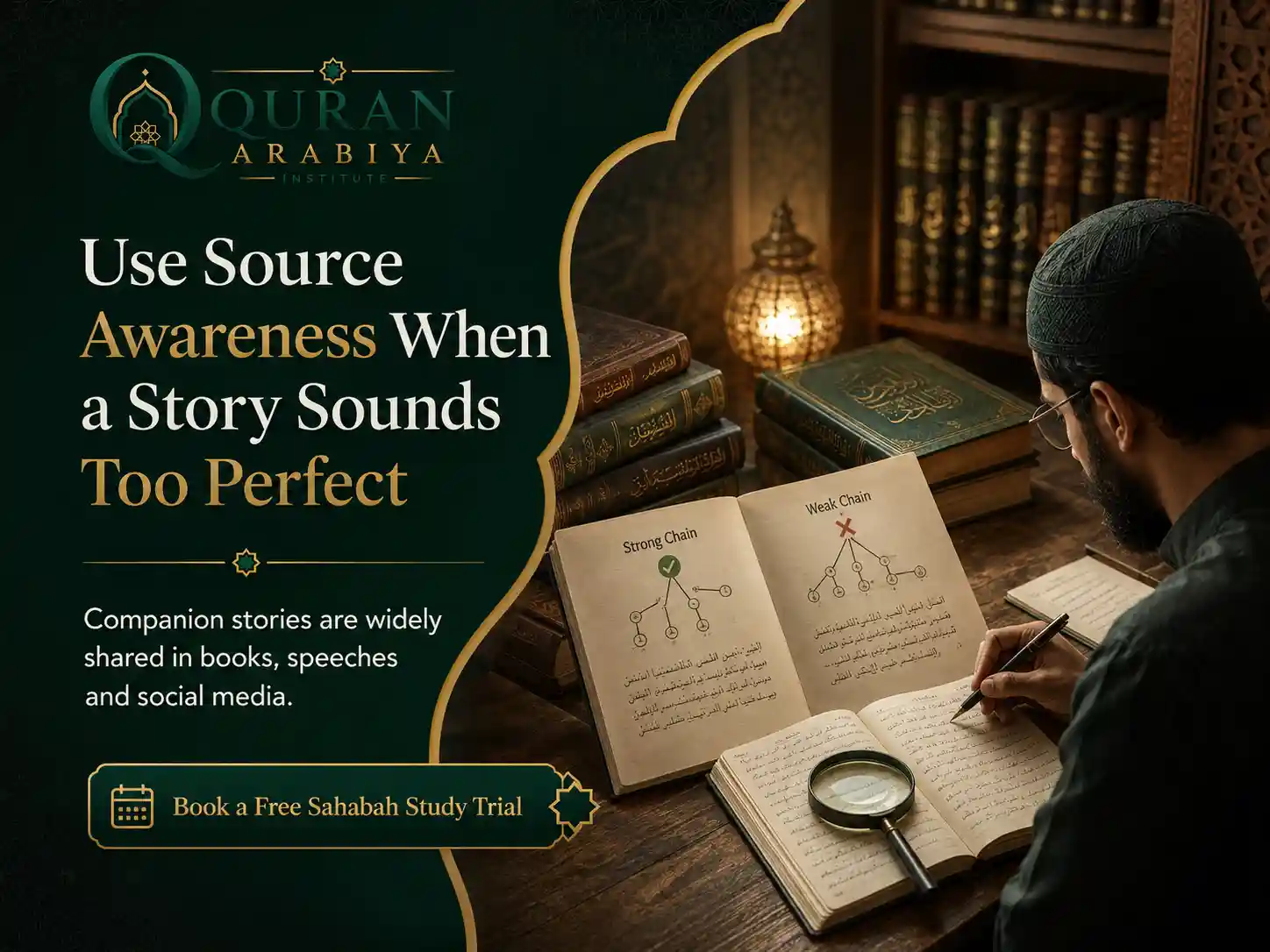
Parents do not need to reteach the whole lesson. A short follow-up can ask the child to retell one event, remember one name and choose one character action to practice that week.
This makes Islamic heroes for kids a family-learning idea without creating pressure or turning every dinner conversation into a test.
As the learner grows, they may want deeper biography, more source discussion or the political history of Abu Bakr, Umar, Uthman and Ali رضي الله عنهم. At that point, the general Sahabah page or Rightly Guided Caliphs course becomes the better next step.
The kids page should stay focused on child learning rather than expanding until it duplicates the older-student courses.

Retell selected Sahabah stories in a clear age-appropriate sequence.
Identify the main character value shown in a studied story.
Connect selected lessons to realistic school, home and friendship situations.
Remember key companion names without being overloaded by unnecessary detail.
Develop positive Muslim role models through accurate, source-aware storytelling.
Book a free trial and tell the academy the child's age, previous Seerah/Islamic Studies knowledge and the kind of stories they already enjoy. The teacher can then choose an age-appropriate starting point and show how the lesson will move from story to understanding and character.
The course can be adapted for children and young teens. The free trial should consider reading/comprehension level, attention and previous Islamic Studies rather than age alone.
No. The course can include faith, knowledge, kindness, generosity, family, courage, worship and service. Conflict is only one part of the companions’ lives.
The teacher should use reliable source material and avoid popular anecdotes that cannot be responsibly presented as fact.
No. It is a focused companion-stories course. A broader Islamic Studies for Kids track can cover belief, worship, Seerah, Hadith, Adab and other subjects.
Parents can share the child’s age, previous learning, concerns and goals so the academy can recommend an appropriate teaching level and teacher match.
Children and young teens, especially families seeking positive Muslim role models and an online course that parents can reinforce at home.
The starting point does not have to be lesson one. In a live one-to-one setting, the teacher can identify what is already clear, locate the first real gap and adjust the depth without changing the course’s central historical focus.
Chronology is used as an organizing spine rather than a memorization target. Timelines, cause-and-consequence notes and short recaps help the learner explain how one event prepares the next and why a turning point matters.
The course should distinguish well-established chronology from interpretive or disputed details and avoid turning a debated reading into a marketing promise. Where the source document flags caution, the teacher can explain that difference rather than flatten it into certainty.
Arabic is not assumed as a universal prerequisite for this category. If a selected text, edition or reading route requires a particular language level, that should be confirmed during the course-fit conversation before regular study begins.
The academic focus stays intact while explanation, pacing and depth can change. One-to-one teaching allows the teacher to spend more time on names, relationships, maps, source questions or analytical discussion according to the learner’s age and prior study.
The conversation can clarify age, prior knowledge, preferred depth, learning goal and suitable scheduling before the route is chosen. It is a starting-level discussion, not a promise of a fixed syllabus length or certificate.
Progress should become visible in explanation, sequence and context rather than page count alone. A useful checkpoint is whether the learner can retell selected sahabah stories in a clear age-appropriate sequence. identify the main character value shown in a studied story.
The next step depends on the intent this page deliberately does not absorb. Do not include graphic conflict detail, adult political disputes or deep source debates in public kid-facing copy. Do not let ‘Islamic heroes for kids’ become exaggerated superhero language or unsupported storytelling. The teacher can use the final lessons to identify the most logical sibling course instead of stretching this page beyond its purpose.
If you are considering Stories of the Sahaba for kids, begin with the historical question you actually want answered and the depth you can sustain. The free trial can clarify your starting knowledge and route you into this course or a more specific sibling topic without turning disputed interpretation into a fixed promise.