An Al Takallum Arabic course online gives learners a modern, communicative MSA sequence with a clear textbook spine. The strongest way to use the series is not to read the dialogue, answer the workbook and stop. A live one-to-one teacher can turn each lesson into listening, retrieval, speaking, reading and writing, then change the situation so the learner proves the language is usable beyond the printed page.
Al-Takallum is designed as a comprehensive modern Arabic course, making it attractive to learners who want a structured curriculum without reducing Arabic to grammar translation. The series gives a predictable progression while keeping communication central.
Learners who strongly prefer classical grammar analysis may find Madinah more natural; those already committed to Bayna Yadaik should use that curriculum page instead.
Al-Takallum is designed as a comprehensive modern Arabic course, making it attractive to learners who want a structured curriculum without. The series gives a predictable progression while keeping communication central. The aim is to turn the same language into usable reading, listening, speaking or writing rather than leave it as a completed exercise.
Placement can sample reading, listening and spontaneous response from around the learner’s previous level. If the student remembers workbook answers but cannot use the same language in a changed situation, targeted review may be more appropriate than moving forward.
The exact internal level mapping should match the edition/materials Quran Arabiya is currently using rather than copying another provider’s packaging.
A useful check is whether the learner can reuse the same language with less support in a different task. That transfer matters more than simply recognizing the example that was practised in the lesson.
A useful cycle can begin with a listening or dialogue context, clarify meaning and target vocabulary, then ask the learner to respond, manipulate the pattern and reuse it in a slightly different situation.
Reading and writing then reinforce the same language so the four skills remain connected rather than taught as separate weekly subjects.
Placement can sample reading, listening and spontaneous response from around the learner’s previous level. If the student remembers workbook answers but cannot use the same language in a changed situation, targeted review may. The aim is to turn the same language into usable reading, listening, speaking or writing rather than leave it as a completed exercise.
A useful cycle can begin with a listening or dialogue context, clarify meaning and target vocabulary, then ask the learner. Reading and writing then reinforce the same language so the four skills remain connected rather than taught as separate. The aim is to turn the same language into usable reading, listening, speaking or writing rather than leave it as a completed exercise.
Words introduced in the lesson are practised through quick recall, categorisation, personal questions and short role-play. The teacher can revisit older vocabulary deliberately so the learner’s active range grows cumulatively.
Recognition is only the first step. The goal is to retrieve the word when the conversation changes.
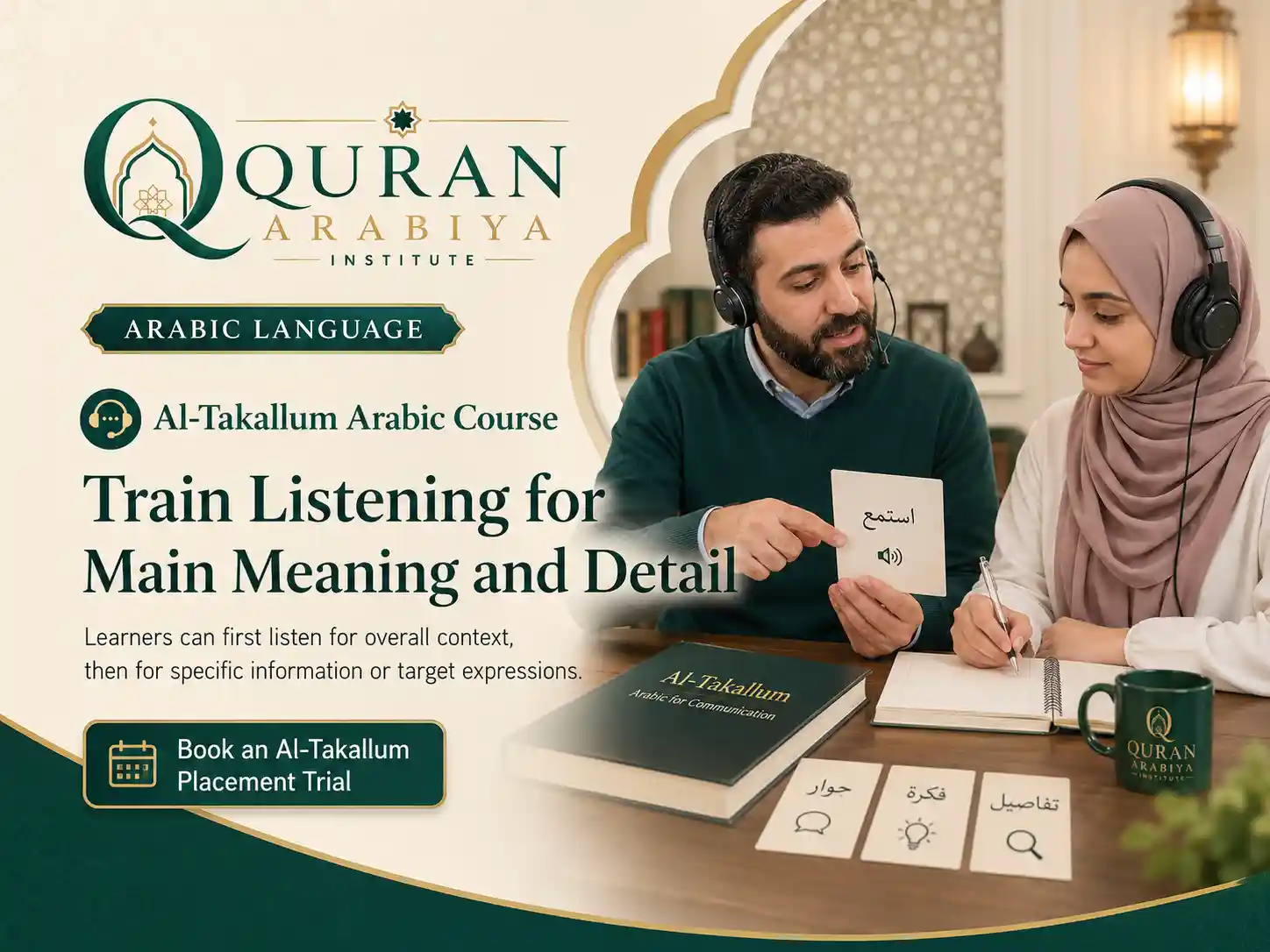
Learners can first listen for overall context, then for specific information or target expressions. Repetition is reduced over time so comprehension becomes more independent.
The teacher can rephrase a question using familiar language to teach flexible understanding instead of dependence on one exact wording.
A useful check is whether the learner can reuse the same language with less support in a different task. That transfer matters more than simply recognizing the example that was practised in the lesson.
Role-play is most useful when it changes something. After studying a model, the learner can change the location, problem, opinion or personal details and continue the exchange without reading.
This is where a live teacher adds more value than a workbook alone: the response becomes unpredictable enough to require real retrieval.
Grammar is explained at the point where it helps the learner understand a recurring structure. A short explanation is followed by comparison, substitution and new sentences.
If the learner later wants a deep theoretical grammar path, the Advanced Arabic category owns that intent. Al-Takallum keeps grammar integrated with communication.
Role-play is most useful when it changes something. After studying a model, the learner can change the location, problem, opinion or personal details and continue the exchange. The aim is to turn the same language into usable reading, listening, speaking or writing rather than leave it as a completed exercise.
Grammar is explained at the point where it helps the learner understand a recurring structure. A short explanation is followed by comparison, substitution and new sentences. The aim is to turn the same language into usable reading, listening, speaking or writing rather than leave it as a completed exercise.
A reading passage can become more than comprehension questions. The learner can summarise it, disagree with an idea, reuse key vocabulary in a personal context or write a short response.
This transfer makes receptive material productive and prevents the course from becoming a sequence of isolated textbook exercises.
Workbook tasks can reinforce a lesson when the learner completes them after some delay and then explains or corrects key items with the teacher. Not every exercise needs equal lesson time.
The teacher can prioritise tasks that reveal understanding and convert mistakes into short review targets.

Workbook tasks can reinforce a lesson when the learner completes them after some delay and then explains or corrects key. The teacher can prioritise tasks that reveal understanding and convert mistakes into short review targets. The aim is to turn the same language into usable reading, listening, speaking or writing rather than leave it as a completed exercise.
Quran Arabiya can add short role-plays, pronunciation correction, listening prompts, visual review or teacher-made sentence challenges when they support the current unit. These additions should reinforce the published sequence rather than replace it with random material.
One-to-one teaching allows the amount of extra practice to match the learner’s specific bottleneck.
A learner is progressing when they understand the main input, retrieve core vocabulary, respond to changed questions, read with comprehension and produce a short spoken or written task using the target structures.
Those mastery signals are more meaningful than a fixed number of weeks per book.

Al-Takallum and Bayna Yadaik are both structured curricula with communicative elements, but they are different series. The Arabic Conversation page, by contrast, is skill-focused and does not need to follow a comprehensive textbook sequence.
The free trial can help choose between curriculum commitment and a more flexible speaking plan.
The teacher can check prior Arabic, review any Al-Takallum material you have studied and use a short speaking/listening task to judge whether that material is active.
You then receive a recommended entry point and a first short-term goal without guessing from the book cover alone.
Al-Takallum and Bayna Yadaik are both structured curricula with communicative elements, but they are different series. The Arabic Conversation page, by contrast, is skill-focused and does not need to follow a comprehensive textbook sequence. The aim is to turn the same language into usable reading, listening, speaking or writing rather than leave it as a completed exercise.
If Al-Takallum is the structure you want, make sure you enter it at the right point and use it actively. Book a free trial to check your level and experience the difference between finishing a textbook task and actually using the language.
It is a comprehensive modern Arabic learning series for non-native speakers built around progressive Modern Standard Arabic study and communicative language development.
Current descriptions of the series and programs using it present speaking, listening, reading and writing as connected parts of the curriculum.
Published/current references describe a multi-level sequence, but Quran Arabiya should verify the exact edition and books being delivered before publishing a fixed internal count.
The series includes starter-level material, but reading readiness and the correct entry point should be confirmed in placement.
Al-Takallum is a comprehensive named curriculum. Conversation classes are a speaking-focused route for learners whose main bottleneck is active Fusha use.
The book provides structure, while live lessons can add explanation, role-play, listening, correction and review according to the learner’s needs.
Neither is universally better. They are different communicative curricula. The better fit depends on your prior study, learning style and goals.
Teens and adults who prefer a modern communicative textbook series and want balanced MSA with active speaking and practical language use.
Not automatically. The free assessment can show which skills are already stable and where the first real gap appears, so a returning learner can avoid unnecessary repetition while a beginner receives the foundation that is actually needed.
The balance should follow the course intent and the learner profile rather than force equal time in every lesson. The teacher can reuse the same vocabulary and structures across several skills so one activity strengthens another instead of becoming a disconnected module.
Grammar is used to make Arabic clearer and more accurate at the depth appropriate to this course. If the learner’s main goal becomes advanced Nahw, Sarf, Quranic Grammar or a named classical text, that deeper intent belongs in the Advanced Arabic category.
Yes. A learner may understand much more than they can read or produce, while another may remember the script but little vocabulary. One-to-one placement lets the teacher build from that uneven profile rather than assume that every student labelled “intermediate” has the same strengths.
The trial can sample the skills most relevant to the course, clarify the learner’s goal, previous study and preferred schedule, and identify the first practical target. It is a course-fit step rather than a promise of a fixed completion time or guaranteed fluency level.
Progress should appear in what the learner can do with less prompting, not only in completed units. A useful checkpoint is whether the learner can use the main skill with increasing independence.
If you are considering Al Takallum Arabic course online, begin with the language task you actually want Arabic to unlock. The free trial can map the learner’s strongest and weakest skills, then route the plan toward a broad Fusha path, a named curriculum or a specialist skill without forcing every learner through the same sequence.