Islamic classes for new Muslims should answer one urgent question: what do I need to understand and practice first? A new Muslim can quickly find hundreds of videos about Aqeedah, Fiqh, Arabic, Hadith and differences of opinion, but information volume is not the same as a foundation. The first course should reduce confusion and build a calm, usable order. This Islamic course for new Muslims can begin with faith, the meaning of worship, purification and prayer, essential daily practice, core Muslim vocabulary and the questions that naturally arise after conversion. The free trial helps identify what is already understood and which practical step deserves attention first. It is part of our online Islamic Studies courses. To learn the daily supplications step by step, see the Duas and Adhkar course.
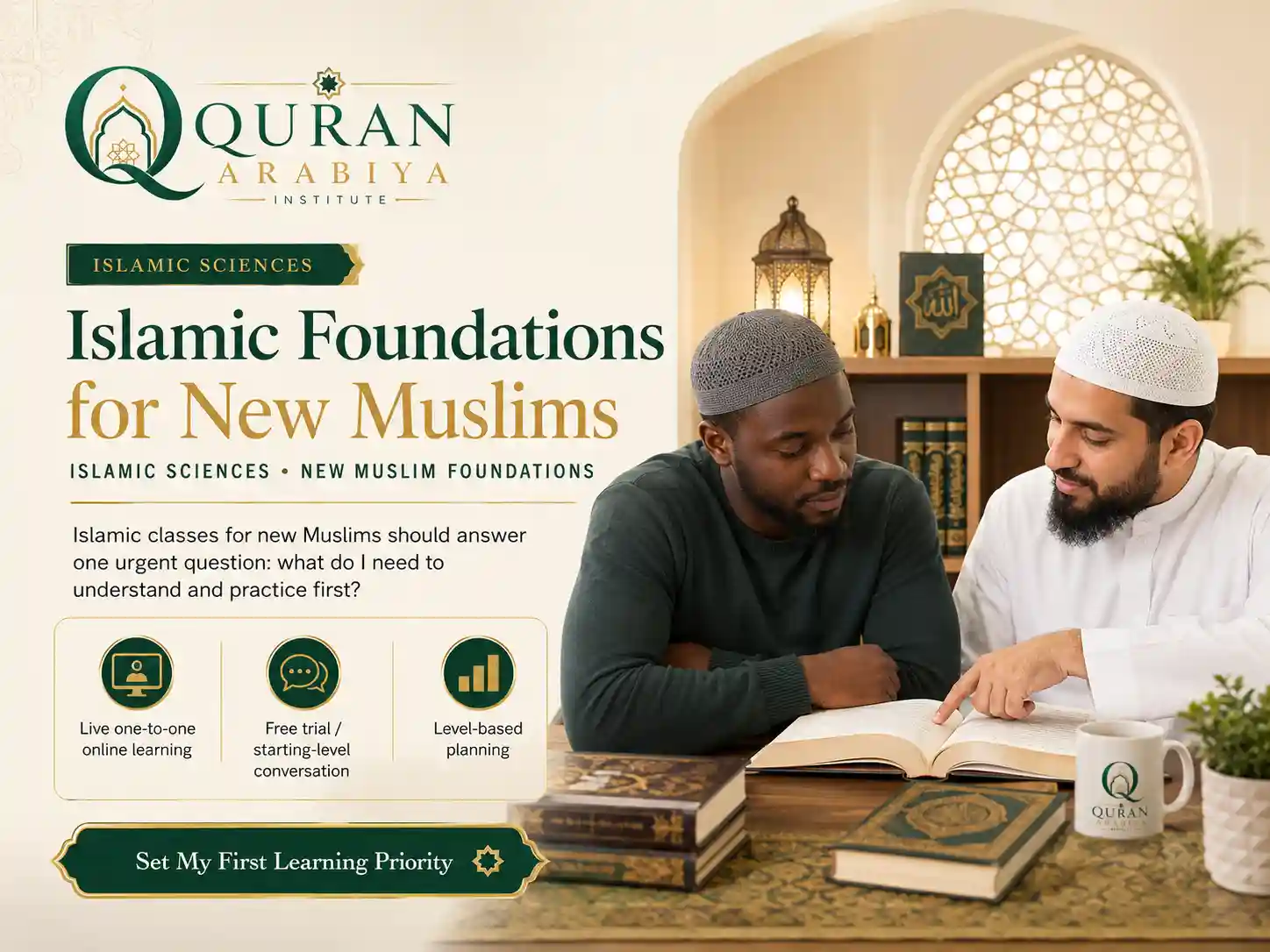
New Muslim classes online work best when they protect the learner from unnecessary overload. The first layer is belief, the Shahadah, the meaning of worship, Salah foundations and the basic duties a Muslim needs for daily practice. Specialist debates and advanced terminology can come later.
A clear priority list gives the learner permission not to know everything immediately. That reduces anxiety and creates a stronger base for later Islamic Studies.
Basics of Islam for converts should explain belief in Allah, the Messengers, revelation, the Hereafter and Divine Decree in clear language. The aim is to understand what the Muslim affirms and how that belief changes worship and reliance, not to begin with a dense dictionary of theological terms.
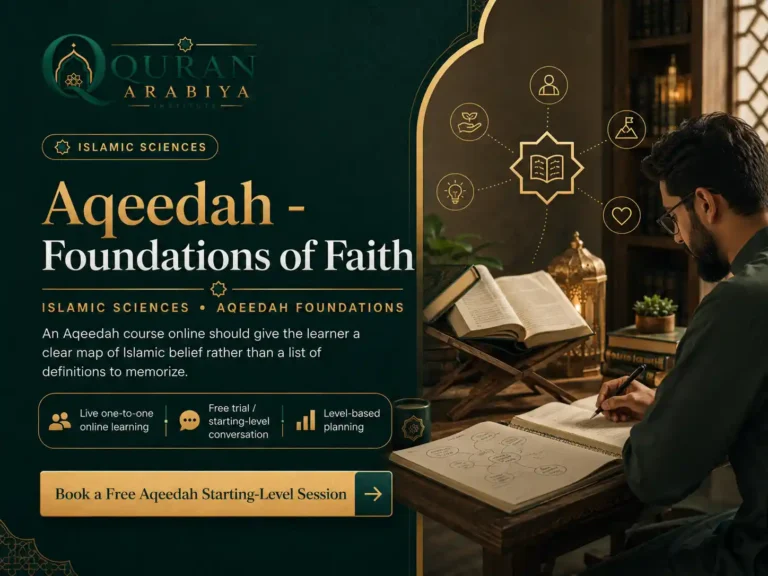
When a learner later wants deeper creed study, the dedicated Aqeedah course can provide a more systematic route.
Matters First. The first layer is belief, the Shahadah, the meaning of worship, Salah foundations and the basic duties a Muslim needs for daily.
Aqeedah. The aim is to understand what the Muslim affirms and how that belief changes worship and reliance.
Purification . Wudu and Salah are easier to learn when the student can ask, demonstrate, correct and repeat. A teacher can separate the essential sequence from extra detail.
Family. A useful foundation class distinguishes core religious duties from cultural habits and explains when a question has legitimate juristic detail that cannot be. This helps the learner build confidence without assuming that the loudest opinion online is automatically the only Islamic position.
A teacher can separate the essential sequence from extra detail, explain unfamiliar Arabic phrases and check whether the learner understands what they are doing rather than only copying movements.
Practical worship is one of the strongest reasons to choose guided Islam for converts online instead of relying only on articles.
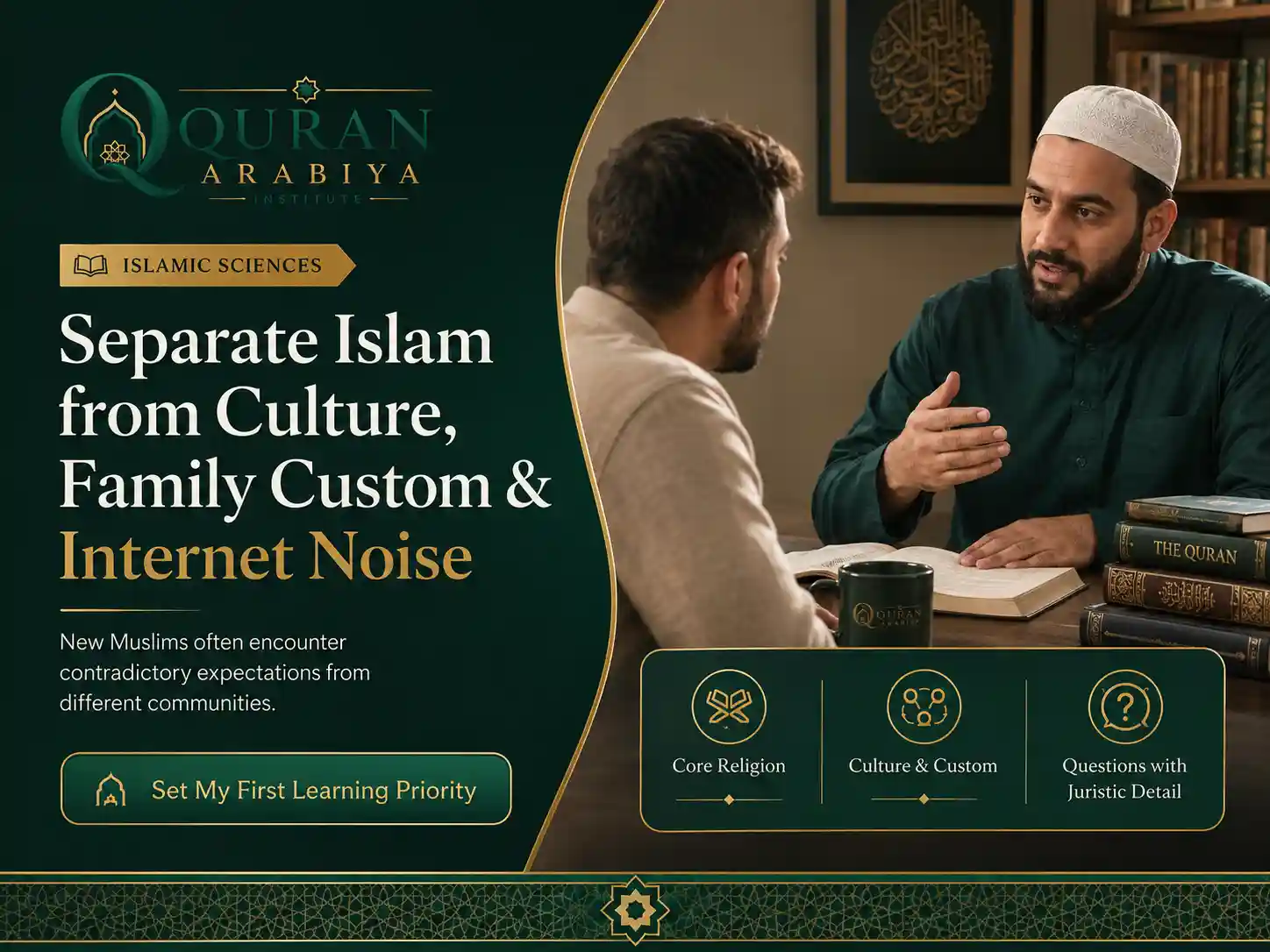
New Muslims often encounter contradictory expectations from different communities. A useful foundation class distinguishes core religious duties from cultural habits and explains when a question has legitimate juristic detail that cannot be reduced to one social-media answer.
Ask Questions. Islamic studies for reverts should create room for questions about prayer mistakes. Private teaching can slow down and define terms without embarrassment. The aim is to understand the principle clearly enough to recognize where it applies, with guided discussion checking understanding before the learner moves deeper.
Dua. A new Muslim does not need to become fluent in Arabic before practicing Islam. The course can introduce essential prayer phrases, short Surahs, daily Duas and key words gradually, while Quran reading and Arabic remain separate.
Islamic studies for reverts should create room for questions about prayer mistakes, family relationships, food, clothing, work, Ramadan, mosque etiquette and everyday Muslim language.
When a question requires a case-specific fatwa, the responsible answer is to identify that boundary and direct the learner to qualified guidance rather than treating the lesson as an all-purpose ruling service.
Placement. The trial should not feel like an exam.
The course can introduce essential prayer phrases, short Surahs, daily Duas and key words gradually, while Quran reading and Arabic remain separate learning paths when deeper literacy is needed.
The goal is sustainable progress: a small set of phrases understood and used correctly is more useful than an overwhelming memorization list.
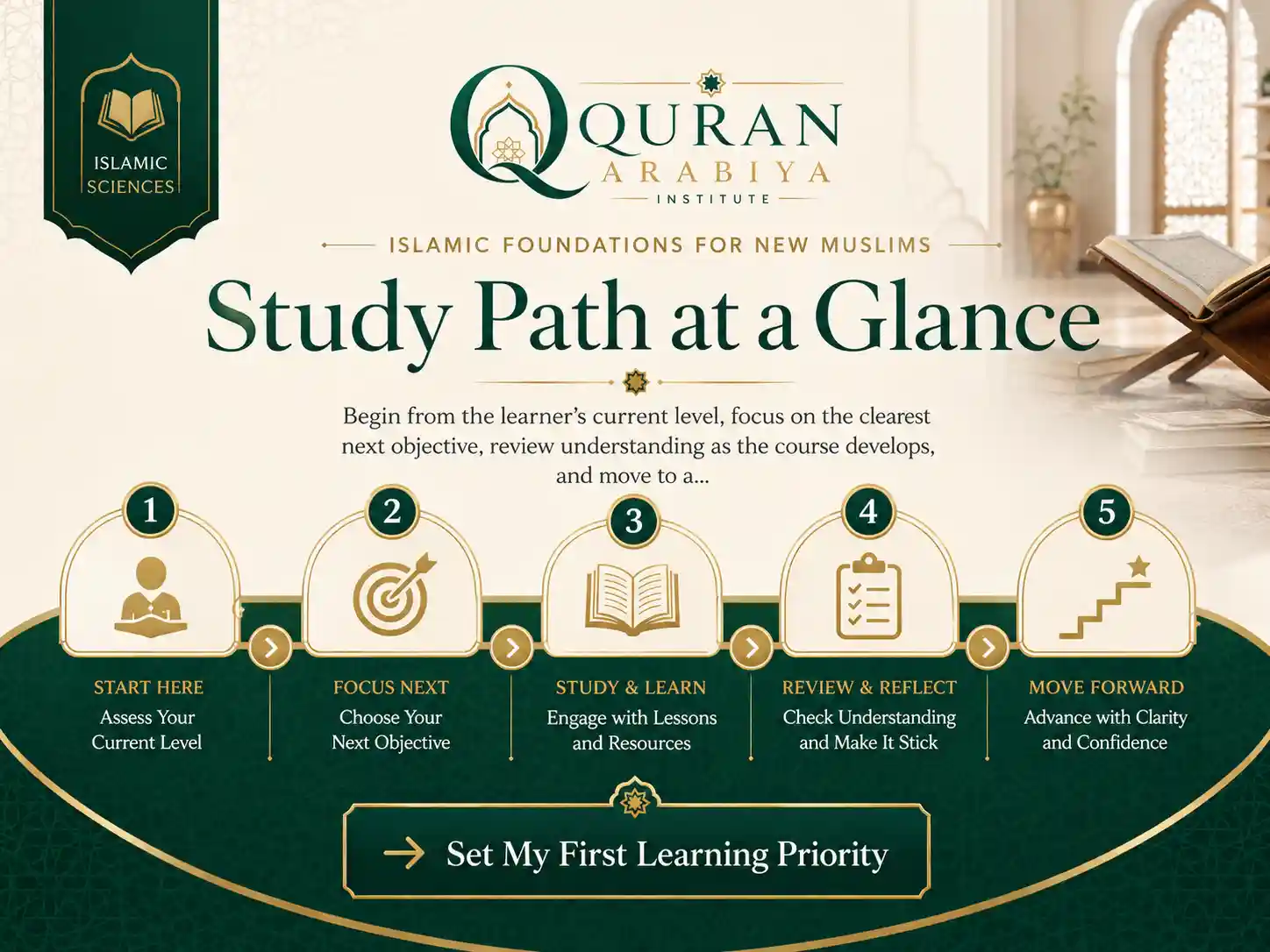
It can simply map how recently the learner accepted Islam, what they already know, whether Salah is established, what questions are urgent, and what pace is realistic.
That produces a sensible starting plan and helps decide when the learner should later move into adult Islamic Studies, Aqeedah, Fiqh or Quran study.
Understands the essential beliefs and practices that deserve first priority.
Can build and correct a basic purification and Salah routine with guided support.
Distinguishes core Islamic teachings from cultural expectations more clearly.
Develops confidence asking foundational questions without embarrassment.
Leaves with a sustainable next-step plan instead of an overwhelming list of subjects.
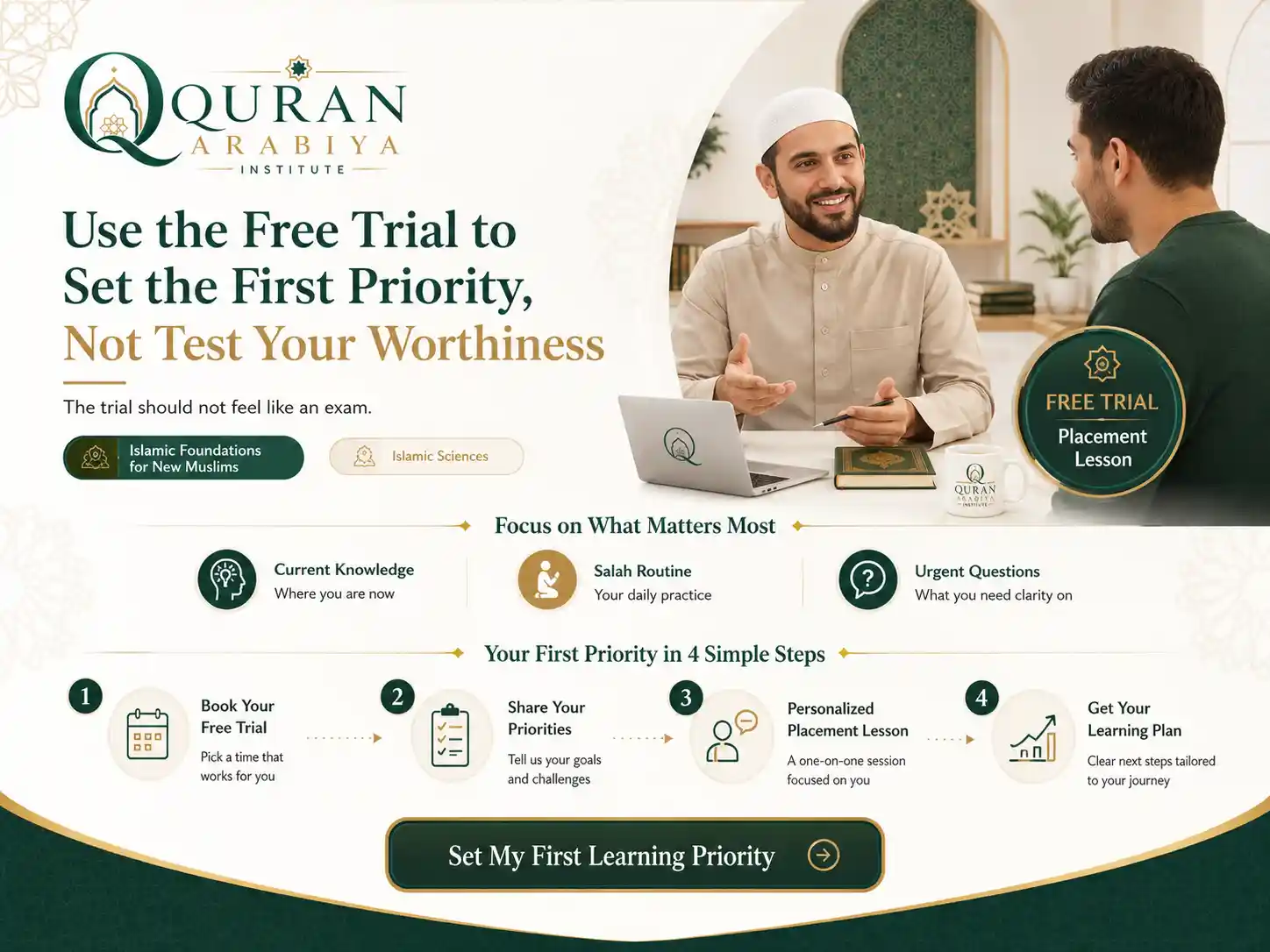
Book a free trial so your first learning plan starts with the faith, worship or daily-practice need that matters most now – without forcing advanced subjects before the foundation is ready.
No. It can also help reverts who accepted Islam earlier but never received a structured foundation.
No. Essential Arabic phrases can be introduced gradually; deeper Arabic or Quran reading can be studied on separate dedicated paths.
Prayer and purification can be central early priorities, but the exact course sequence should reflect your current level and needs.
Yes for learning and clarification. A case-specific fatwa or legal matter may need a qualified specialist beyond the scope of a foundations course.
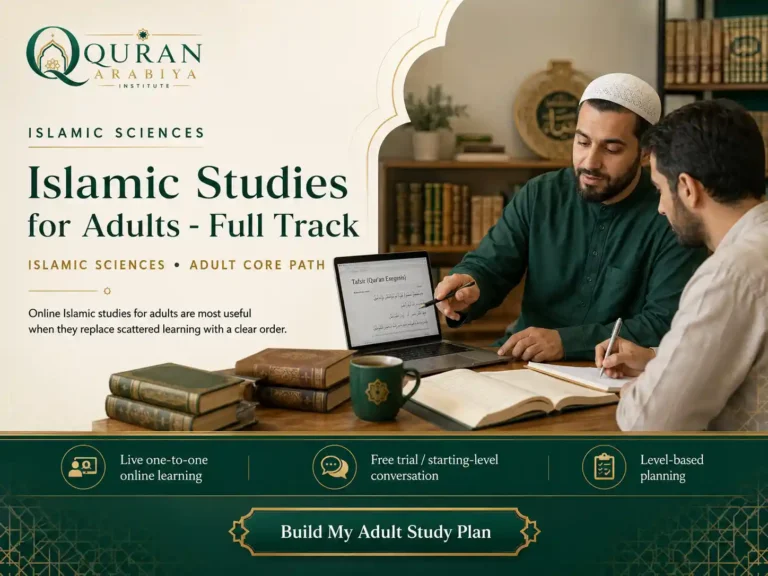
Depending on your goals, you can continue into the adult Islamic Studies track or focus on Aqeedah, Fiqh, Hadith, Tafsir, Quran reading or Arabic.
New Muslims, recent converts/reverts and adults exploring how to establish core beliefs, worship and daily routines after Shahadah.
No. The course gives the learner a structured foundation and helps identify the next priority. When one subject becomes the main goal, the specialist Aqeedah, Fiqh, Hadith, Tafsir, Adab or other dedicated route should take over rather than being compressed into one page.
Progress should be visible in understanding and application rather than chapters finished. A useful checkpoint is whether the learner can understands the essential beliefs and practices that deserve first priority. can build and correct a basic purification and salah routine with guided support.
It is not simply the adult full track with fewer chapters; it should teach what matters first and delay specialist depth until the learner has a stable foundation.
If you are considering Islamic classes for new Muslims, begin with the concept or study gap that matters most now.